|
Every year, ALA recognizes the achievements of more than 200 individuals and institutions with an array of awards honoring their service to librarians and librarianship.
Chosen by juries of their colleagues and peers, winners embody the best of the profession’s leadership, vision, and service as well as a continued commitment to outreach and equity, diversity, and inclusion.
Award recipients were honored at a June 29 ceremony and reception during ALA’s 2025 Annual Conference and Exhibition in Philadelphia.
This selection represents only some of those recognized in 2025. For a complete list of winners, visit
ala.org/awards....
American Libraries feature, Sept./Oct.
| |
|
Allison Escoto writes: “This is a fraught time for libraries and those who work in them.
As we face censorship, devastating budget and grant cuts, and politically motivated personal attacks, the firsthand accounts of librarians—as well as realistic portrayals of the profession in popular culture—matter more than ever.
These memoirs and fiction titles contribute important perspectives in our current climate.”...
American Libraries column, Sept./Oct.
| |
|
ALA led a coalition of library, museum, and cultural organizations and workers in filing an
amicus brief in
Rhode Island v. Trump, the case filed by 21 state attorneys general against the Trump administration’s
executive order to dismantle the Institute of Museum and Library Services (IMLS) and other agencies created by Congress.
The brief urges the First Circuit Court of Appeals to uphold an injunction against the executive order.
The Rhode Island case is parallel to
ALA’s own challenge to the dismantling of IMLS, filed by Democracy Forward on behalf of ALA and the American Federation of State, County, and Municipal Employees on April 7....
ALA Public Policy and Advocacy Office, Sept.
3; AL: The Scoop, Apr. 8
| |

|
|
|
ALA invites library users nationwide to
nominate their favorite librarians for the prestigious I Love My Librarian Award through December 15. The national award recognizes the outstanding public service contributions of librarians working in public, school, college, community college, or university libraries.
Ten librarians will each receive $5,000 in recognition of their outstanding achievements.
Awardees will be honored at the I Love My Librarian Award ceremony at the 2026 ALA Annual Conference in Chicago; honorees will also receive free full conference registration and a travel stipend to cover expenses as part of their award packages....
ALA Communications, Marketing, and Media Relations Office, Sept.
3
| |
|
ALA warned that a
September 3 proposal by current Federal Communications Commission (FCC) Chairman Brendan Carr to eliminate E-Rate funding for lendable Wi-Fi hotspots would reduce internet access for many library patrons.
In a statement, ALA President Sam Helmick said, ‘ALA has advocated for the FCC's new hotspot program because we know our communities need them.
Students, adult learners, job seekers, seniors, and rural residents all need high-speed internet, even after the library closes in the evening.’ A resolution to abolish the hotspot program
passed the Senate in May, but companion legislation in the House has only two sponsors....
ALA Public Policy and Advocacy Office, Sept.
5, May 8
| |
|
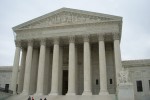
Judy Ehrenstein writes: “There is little doubt that the library community at large is deeply saddened by the recent US Supreme Court decision in
Mahmoud vs. Taylor, ruling in favor of parents’ right to opt their children out of lessons based on religious objections to LGBTQIA+ themes in books. I live and work in Montgomery County, Maryland, and these are the schools my children attended and ones I visit as a librarian.
The repercussions will be great.
My fear is that the easy way out—don’t read anything potentially objectionable in your classroom, as it could be seen as coercive—will win.”...
ALSC Blog, Sept. 9
| |

|
|
|
Kyle Bylin writes: “Access to the artificial intelligence (AI) future is already uneven.
Students at well-resourced institutions will accumulate material advantages that will harden into an intelligence gap layered atop the long-standing digital divide.
First came unequal broadband.
Then uneven digital literacy—the skills to find, vet, and interpret information online.
Now we face a third divide: differential access to collaborative intelligence—the ability to work fluidly with advanced AI systems, evaluate outputs, orchestrate multi-tool workflows, and build domain insight faster than peers.
University libraries cannot afford to remain passive as this shift accelerates.”...
Choice 360: LibTech Insights, Sept.
8
| |
|
Brian Shlonsky writes: “Less than a month into Jefferson County (Ky.) Public Schools’ (JCPS) first year with a cellphone ban, JCPS has found that students are checking out library books at a record rate.
JCPS said Pleasure Ridge Park High School students checked out more than 1,000 books during the first 17 days of the school year, yet during the entire 2024–2025 school year, only 2,104 books were checked out of the library.” The district
reported significant increases at other schools as well....
WAVE-TV (Louisville, Ky.), Sept. 2; Jefferson County (Ky.) Public Schools, Sept.
2
| |
|
Taylor Seely writes: “More than
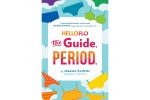
50 sex-ed and puberty books were quietly removed from kids' sections at 12 libraries across Maricopa County (Ariz.) this summer after complaints from conservative Christian activists and residents.
The county Board of Supervisors directed the changes in response to concerns that had long existed for a small faction of grassroots activists but took on new fervor after the 2024 election—when voters installed three new Republican members of the board.
Yet despite pushing for the changes, supervisors voted on none of them—allowing the removal to occur without a formal public input process.”...
Arizona Republic, Sept.
8
| |

|
|
|
Andrew Richard Albanese writes: “The terms of a massive
$1.5 billion settlement between authors and AI company Anthropic have only been available for a few days, but the deal already has one major objector: Willam Alsup, the federal judge who must ultimately approve the deal.
According to Bloomberg News, Alsup spent much of a
54-minute hearing on September 8 blasting the initial settlement filing, and questioned whether the class lawyers were attempting to force a deal ‘down the throat of authors’” before refusing to grant preliminary approval.
He set a second hearing for September 25 to receive clarifying information....
Words & Money, Sept. 9, Sept. 5; Bloomberg Law, Sept.
8
| |
|
Florian Kastner and Benjamin Schischka write: “Photoshop is synonymous with image editing, but not everyone wants a subscription. Today, there are numerous free programs and online tools that deliver surprisingly good results. In this article, we present eight alternatives and explain their functions, limitations, and who they’re best suited for.”...
PC World, Sept. 5
| |
|
Jakub Krupa writes: “An ‘express’ library has opened in a new metro transit station in Warsaw, Poland, aiming to provide an appealing cultural space to encourage residents and commuters to forgo smartphones in favor of books.
The stylish
Metroteka in the Kondratowicza M2 line metro station in the Polish capital’s Targówek district offers two reading areas for adults and children, as well as a space for public readings and events.” The 150-square-meter space holds 16,000 books that can be borrowed with an express checkout machine using contactless chips and returned on site or at a street-level locker that is always available....
The Guardian, Sept. 7
| | |

|
|
|
American Libraries Direct is a free electronic newsletter emailed every Wednesday to personal members of ALA.
Editor, AL Direct: Greg Landgraf
Direct ad inquiries to: Melissa Carr
Send news and feedback: AL Direct
All links outside the ALA website are provided for informational purposes only. Questions about the content of any external site should be addressed to the administrator of that site. AL Direct FAQ.
American Libraries will not sell your email to outside parties, but your email may be shared with advertisers in this newsletter should you express interest in their products by clicking on their ads or content. If advertisers choose to communicate with you by email, they are obligated to provide you with an opportunity to opt-out from future emails in compliance with the CAN-SPAM act of 2003 and the European Union’s General Data Protection Regulation of 2018. Read the ALA privacy policy.
To manage your American Libraries email preferences, click here.
To unsubscribe from all ALA emails, click here.
American Library Association | 225 N. Michigan Avenue, Suite 1300 | Chicago, IL 60601
|
|
|
|
|
|
|
|





.jpg)