|
Reema Saleh writes: “One of librarian Sondra Eklund’s patrons recently asked the library to acquire a children’s book about pets other than cats or dogs, so she went looking.
When she came across a book titled Rabbits: Children’s Animal Fact Book from the publisher Bold Kids, it seemed promising.
But when the book arrived, Eklund learned how bad it could be: ‘Unbelievably bad.’ Eklund now suspects the title and others from Bold Kids were created by artificial intelligence (AI). She is far from the only librarian grappling with AI issues.”...
American Libraries feature, Sept./Oct.
| |
|
Anne Ford writes: “First things first: Legends don’t need middle names. ‘It’s Smokey Bear, not Smokey the Bear,’ says Sara Lee, lead librarian for special collections at the National Agricultural Library, who oversees the US Forest Service Smokey Bear Collection.
That’s just one of many intriguing tidbits to be learned while visiting the Beltsville, Maryland–based archive, which traces Smokey’s 81-year-and-counting career as the Forest Service’s wildfire prevention mascot.
Open to the public by appointment, the collection encompasses posters, comics, original artwork, motion pictures, sound recordings, and other memorabilia.”...
American Libraries feature, Sept./Oct.
| |
|
Pioneering actor, author, and activist George Takei has been named honorary chair of Banned Books Week, which will take place October 5–11. Takei has leveraged his popularity as a star of the Star Trek franchise to advocate for several causes, including the rights of Japanese Americans and LGBTQIA+ individuals. Takei will be joined by youth honorary chair Iris Mogul, a Florida teen who started a banned books club in her community after the state implemented laws that resulted in the removal of hundreds of books about race, history, and sexuality from schools....
ALA Office for Intellectual Freedom, Sept.
22
| |

|
|
|
Rachel Grover writes: “We’ve all been there: You find a perfect library program idea on social media, you put in hours of work getting it ready, and then it flops.
It’s a sign that maybe the most successful ideas aren’t found on social media.
Students in different communities have different interests, and what worked in one library, even your local public library, might not work for yours.
Despite our best efforts, our libraries will only be great if we take into account the opinions and voice of our own students.”...
Knowledge Quest, Sept.
18
| |
|
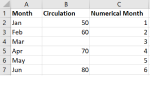
Sam Suber writes: “Ever wonder how Netflix seems to recommend shows you end up loving even if you have barely rated anything? Behind the scenes, systems like Netflix rely on a process called data imputation.
Data imputation works by filling in the missing values so predictions can still be made.
Libraries face similar challenges.
There could be gaps in circulation logs, survey responses, or even vendor usage reports.
Working with imperfect data is part of the job.
But don’t worry—incomplete data does not mean useless data, and it does not require coding knowledge to fix.”...
Choice 360: LibTech Insights, Sept.
22
| |
|
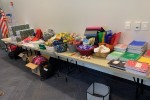
Maria Trivisonno writes: “Three years ago, FamilySpace was launched at two branches of Cuyahoga County (Ohio) Public Library. Family Advisory Committees (FACs) at both locations give feedback and ideas to library staff, and just before the start of the school year, our Garfield Heights Branch FAC sponsored a Toy and Clothing Exchange.
About 55 people attended, several families shopped, and a handful of middle-grade kids were spending the day at the library and were so very grateful for new backpacks and school supplies.”...
ALSC Blog, Sept. 19
| |

|
|
|
Dennis Massie writes: “In late August, interlibrary loan staff at libraries across the United States found themselves facing an unprecedented situation.
Revocation of the de minimus tariff exemption for packages worth less than $800, effective August 29, threw a blanket of uncertainty over global international shipping operations.
More than a dozen countries abruptly paused all shipping to the US, as did many document suppliers and book vendors.
The
SHARES community, a multinational resource sharing consortium whose members are being impacted in different ways depending on their local context, responded as resource sharing practitioners always do: by banding together.”...
Hanging Together, Sept.
15
| |
|
Samantha Simmons writes: “Troy (N.Y.) voters on September 16 overwhelmingly approved a controversial tax levy for the city’s public library. To make the library a more competitive workplace, support its newly unionized employees, hire more administrative staff, and better maintain two historic buildings, residents approved a 30 percent tax levy increase.
Of 1,383 ballots cast, 309 voted against the proposal.
The library’s main branch downtown, which recently underwent a roof renovation, was open only six days in July due to a lack of staff and adequate air conditioning.
Meanwhile, the Lansingburgh branch is undergoing renovations after severe water damage in 2023.”...
WAMC/Northeast Public Radio (Albany, N.Y.), Sept. 17
| |
|
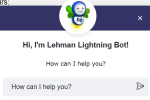
Michelle Ehrenpreis and John DeLooper write: “In November 2019, Lehman College’s Leonard Lief Library in New York implemented Ivy.ai, a proprietary chatbot, on its website.
This implementation was the first academic library installation of a vendor-supplied chatbot to be discussed in the professional literature.
In April 2023, the chatbot’s vendor began using OpenAI’s ChatGPT Application Programming Interface to improve the chatbot’s functionality. The authors assessed the chatbot’s usage during the Spring 2023 semester to reveal the kinds of questions the chatbot struggled to answer, and possible reasons why.
The article also presents best practices for libraries looking to implement or experiment with chatbots.”...
portal: Libraries and the Academy, vol.
25, no. 4, Oct. (preprint)
| |

|
|
|
Elizabeth Hutchinson writes: “In my previous articles, I’ve made the strategic case for library-curriculum integration.
The biggest barrier isn’t budget, time, or even librarian expertise.
It’s teacher readiness to collaborate.
You can have the most curriculum-confident librarian and the clearest strategic vision, but if your teachers see library collaboration as extra work rather than professional enhancement, your integration efforts will stall before they start.
Librarian readiness is equally important, but right now, let’s focus on the teacher side of the equation, because even the most eager and capable librarian can’t create effective partnerships alone.”...
Elizabeth Hutchinson, Sept.
15
| |
|
Katie Walsh writes: “For all of the difficult moments I may experience during a week, I usually find that there’s at least one moment, once a week, that makes it all worth it.
One evening, before the high school’s masquerade-themed homecoming dance last year, a teen said he needed to stay at the library until just before closing to change his shoes.
He ducked into the bathroom and emerged wearing his suit jacket, jeans, a beautiful black masquerade mask with an elegant feather, and a pair of 4-inch black stiletto heels.”...
Slate, Sept. 14
| |
|
“Nearly 50 years after Augusto Pinochet’s dictatorship hunted leftist texts, librarians in Santiago, Chile, uncovered a forgotten cache in the National Library’s attic, rekindling the tale of publishers, readers, and catalogers who refused to let culture die.
Staff at Chile’s National Library opened a dusty garret and discovered boxes of books and pamphlets tied to [Pinochet’s predecessor] Salvador Allende’s government: socialist texts, communist tracts, and even presidential speeches that had never entered the catalog.
That they survived at all feels improbable.
After the military coup of September 11, 1973, soldiers raided publishing houses, homes, and libraries.”...
Latin American Post, Sept.
17
| | |

|
|
|
American Libraries Direct is a free electronic newsletter emailed every Wednesday to personal members of ALA.
Editor, AL Direct: Greg Landgraf
Direct ad inquiries to: Melissa Carr
Send news and feedback: AL Direct
All links outside the ALA website are provided for informational purposes only. Questions about the content of any external site should be addressed to the administrator of that site. AL Direct FAQ.
American Libraries will not sell your email to outside parties, but your email may be shared with advertisers in this newsletter should you express interest in their products by clicking on their ads or content. If advertisers choose to communicate with you by email, they are obligated to provide you with an opportunity to opt-out from future emails in compliance with the CAN-SPAM act of 2003 and the European Union’s General Data Protection Regulation of 2018. Read the ALA privacy policy.
To manage your American Libraries email preferences, click here.
To unsubscribe from all ALA emails, click here.
American Library Association | 225 N. Michigan Avenue, Suite 1300 | Chicago, IL 60601
|
|
|
|
|
|
|
|






.jpg)