|
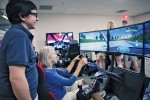
Cass Balzer writes: “Not everyone has access to a safe, reliable car.
And even those who do sometimes need a little help feeling comfortable behind the wheel.
In a growing number of public libraries, virtual driving simulators let users practice everything from parallel parking to driving at night in a safe, low-pressure environment.
Anyone with limited access to traditional driver’s education can benefit, whether they’re a teen preparing for licensure, an older adult whose driving skills need sharpening, a stroke survivor who is recovering their skills, or a formerly incarcerated person trying to get back on the road.”...
American Libraries Trend, Sept./Oct.
| |
|
Brett Bonfield writes: “ALA’s endowment is a major component of the Association’s finances, contributing millions of dollars each year to the budget to support ALA activities.
It’s also one of the least visible aspects of Association operations, and investment activity can be complicated and intimidating to examine.
The trustees value transparency and collaboration.
In an effort to uphold those values and improve communication with members, we will post updates in this column and the
Endowment Trustees page every few months.”...
American Libraries Online, Oct.
17
| |
|
Christine Herman and Jo Phillips write: “As we work on our new Main Library campus project, which is scheduled for completion in 2028, one of our goals is to make the building a destination, particularly for this age group.
Involving teens in decision making is a practice that already guides our programming.
Why not involve them in our space planning too? With a local nonprofit, we developed a unique Creator Club focused on engaging teens in the early design process.”...
American Libraries column, Sept./Oct.
| |
|
Small and rural libraries of all types are invited to apply for the Libraries Transforming Communities: Accessible Small and Rural Communities grant, offering awards of $10,000 or $20,000 to support projects that advance accessibility and inclusion for patrons with disabilities.
Funding may be used for facility improvements, adaptive technologies, staff training, or inclusive programs and services.
This initiative aims to help libraries reduce barriers and create welcoming environments for all members of the community.
Applications are due December 11.
|
| |

|
|
|
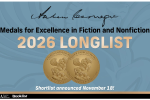
A total of 45 books (21 fiction, 24 nonfiction) have been selected for
the longlist for the 2026 Andrew Carnegie Medals for Excellence in Fiction and Nonfiction. The six-title shortlist—three each for the fiction and nonfiction medals—will be chosen from longlist titles and announced on November 18, and the two medal winners will be announced on January 27, 2026. Cosponsored by Booklist and the Reference and User Services Association, the Andrew Carnegie Medals are the first single-book awards for adult titles given by ALA....
Booklist, Oct. 23
| |
|
David Free writes: “The Association of College and Research Libraries Board of Directors approved new
Artificial Intelligence (AI) Competencies for Academic Library Workers at its October 3 virtual meeting. The document expands on the broad definition of AI literacy, tailoring it into a comprehensive, library-specific set of competencies applicable to academic library workers.
It is meant to serve as a guiding framework for the creation of training programs and as a foundation for communities of librarians to develop their own AI competency frameworks.
Individuals and institutions are encouraged to adapt the competencies to specific job functions, responsibilities, or organizational contexts.”...
ACRL Insider, Oct. 22
| |
|
Amelia Byrne writes: “Many of today’s most critical library services, from library Wi-Fi to hotspot lending to book checkouts, rely on an invisible resource: spectrum. Policymakers manage this valuable resource by setting rules determining who can use specific parts of the spectrum and how.
The
One Bill Beautiful Bill Act included a provision requiring the Federal Communications Commission to auction off more spectrum, including the 6Ghz band and the Citizens Broadband Radio Service—meaning that
unlicensed spectrum that currently powers library operations could be auctioned off for commercial use.”...
Public Libraries Online, Oct.
27; Wiley, July 7; Public Knowledge, July 1
| |

|
|
|
Stephanie Charlefour writes: “As school librarians, we are at the heart of the educational ecosystem—nurturing inquiry, fostering critical thinking, and inspiring a lifelong love of learning.
The
National School Library Standards for Learners, School Librarians, and School Libraries (2nd edition) offers a powerful framework for this mission.
But how do we translate these broad, ambitious standards into meaningful, actionable instruction? A scope and sequence is a strategic document that outlines what will be taught, when it will be taught, and how it aligns with educational standards.”...
Knowledge Quest, Oct.
27
| |
|
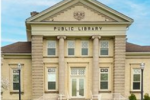
Carnegie libraries across the United States will each receive a $10,000 gift from the Carnegie Corporation of New York to commemorate the 250th anniversary of the signing of the Declaration of Independence.
Carnegie Corporation identified 1,280 libraries whose construction was funded by Andrew Carnegie between 1886 and 1917 that still operate and acknowledge the Carnegie link.
These libraries will be eligible for the gift, which will be distributed in January 2026 and can be used however the libraries wish....
Carnegie Corporation of New York, Oct.
22
| |
|
“Many institutions are looking at their evaluation processes with the goal of making assessment more reflective of the variety of researchers’ contributions and also more aligned to open scholarship.
A key area of attention as part of assessment reform relates to the recognition of a diversity of open contributions, and importantly data outputs, in evaluation.
Make Data Count and HELIOS Open joined forces in the Implementing Data Evaluation at Institutions Working Group.
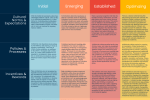
We are pleased to share a resource toolkit, which includes a
maturity model, an
implementation guide, and a
collection of case studies.”...
Make Data Count, Oct.
27
| |

|
|
|
Elizabeth Blair writes: On October 20, “A federal judge ordered the Department of Defense to return books about gender and race back to five school libraries on military bases.
In April, 12 students at schools on military bases in Virginia, Kentucky, Italy, and Japan
claimed their First Amendment rights had been violated when nearly 600 books were removed from the Department of Defense Education Activity schools they attend.
US District Court Judge Patricia Tolliver Giles
sided with the students and their families, writing that ‘the removals were not rooted in pedagogical concerns’ but rather there was ‘improper partisan motivation underlying [defendants’] actions.’”...
NPR, Oct. 21; Military.com, Apr. 16
| |
|
Jason Casden et al. write: “Since the release of multiple competing generative AI platforms, the University of North Carolina at Chapel Hill University Libraries has seen increasingly overwhelming and
service-disrupting traffic from web crawlers. This traffic consists of an unprecedented flood of evasive and extremely aggressive requests, which caused multiple consecutive days of intermittent service disruption for our public catalog interface (and later to various digital collections services). This article will describe these impacts, as well as our evolving and escalating attempts to mitigate the denial-of-service caused by these automated crawls.”...
Code{4}lib Journal, Oct. 21; University of North Carolina Libraries, June 9
| |
|
Liz Bellamy et al. write: “The academic library can be a challenging place for neurodivergent individuals who staff it.
Our survey questions were designed to capture the ways and the extent to which libraries take neurodiversity into account when developing and enacting their hiring practices.
It appears libraries engage in some best practices for hiring neurodivergent candidates, but the most widely adopted initiatives tend to be those more ‘low-hanging fruit’ that can be done with minimal effort or consensus building.”...
In the Library with the Lead Pipe, Oct.
22
| | |

|
|
|
American Libraries Direct is a free electronic newsletter emailed every Wednesday to personal members of ALA.
Editor, AL Direct: Greg Landgraf
Direct ad inquiries to: Melissa Carr
Send news and feedback: AL Direct
All links outside the ALA website are provided for informational purposes only. Questions about the content of any external site should be addressed to the administrator of that site. AL Direct FAQ.
American Libraries will not sell your email to outside parties, but your email may be shared with advertisers in this newsletter should you express interest in their products by clicking on their ads or content. If advertisers choose to communicate with you by email, they are obligated to provide you with an opportunity to opt-out from future emails in compliance with the CAN-SPAM act of 2003 and the European Union’s General Data Protection Regulation of 2018. Read the ALA privacy policy.
To manage your American Libraries email preferences, click here.
To unsubscribe from all ALA emails, click here.
American Library Association | 225 N. Michigan Avenue, Suite 1300 | Chicago, IL 60601
|
|
|
|
|
|
|
|




.jpg)
 (002)-resized.png)