|
American Libraries’ annual roundup looks back at the news that affected libraries and the library profession in 2025. Among these stories are the closure of Baker & Taylor, the abrupt termination of Librarian of Congress Carla Hayden, the cancellation and reinstatement of grants from the Institute of Museum and Library Services in the wake of President Trump’s efforts to dismantle it, the release of several librarian-focused documentaries, and the appointment of new ALA Executive Director Dan Montgomery....
American Libraries feature, Jan./Feb.
| |
|
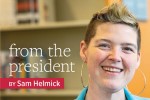
Sam Helmick writes: “Your story matters. Not just because you curate collections or answer reference questions, but because you build bridges between people and knowledge.
You have witnessed quiet triumphs: a child learning to read, a student discovering their passion, a senior reconnecting with history.
These moments are part of our collective story, and they deserve to be shared.
Telling your story isn’t self-promotion. It’s advocacy. It shows the world what libraries truly do.
Sharing your story helps others see the difference you make and why your work matters.”...
American Libraries column, Jan./Feb.
| |
|
Eric Stroshane writes: “The people who work in libraries are many things: dedicated civil servants, passionate about the myriad benefits of literacy, staunch supporters of First Amendment rights, and more.
Insidious lies about library workers and the books on library shelves have become widespread.
These lies threaten democratic norms, generate confusion, and expand social division.
Let’s break down the lies so we can elevate the truth and celebrate those working in libraries for who they really are and the important, selfless work they do.”...
Intellectual Freedom Blog, Dec.
17
| |
|
We live in a world of data.
From satellites and smartwatches to social media and swipes at a register, we have ways to measure the economy to an extent that would have seemed like science fiction just a generation ago.
The data deluge raises important questions: How can we distinguish meaningful signals of economic activity from noise? To what extent can new sources of data complement or even replace official statistics? And, at a more fundamental level, are we even measuring the metrics that matter most in today’s increasingly digital economy?
Find out all these answers and more today!
|
| |

|
|
|
Lee Cooney writes: “Living in a city known for its Deaf schools, I am very aware of the importance of libraries adequately serving Deaf and hard of hearing patrons.
But even in the best of times, many libraries do not have the resources to support widespread American Sign Language and Deaf culture education.
Still, it is important for library staff to engage as well as possible with this diverse and growing group of patrons.
Let’s explore the free and accessible information that organizations have gathered to support our work with these underserved communities.”...
ALSC Blog, Jan. 3
| |
|
Caelin Ross writes: “Belonging is often described as a feeling—something we either experience or lack, as if it is found by chance rather than actively created.
But belonging is built through care, attention, and the often-invisible work of those who make room for others.
Moments of transition make that labor visible, inviting us to pause and give flowers thoughtfully while we can.
This piece is a reflection on what it means to build belonging through librarianship, and on the communities and colleagues who make that work possible.”...
ACRLog, Dec. 19
| |

|
|
|
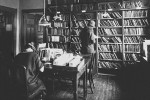
Eric Niiler writes: “On January 2, the Trump administration is closing the National Aeronautics and Space Administration’s (NASA) largest research library, a facility that houses tens of thousands of books, documents, and journals—many of them not digitized or available anywhere else.
The shutdown of the library at NASA’s Goddard Space Flight Center in Greenbelt, Maryland, is part of a larger reorganization under the Trump administration that includes the closure of 13 buildings and more than 100 science and engineering laboratories on the 1,270-acre campus by March.”...
New York Times, Dec. 31
| |
|
John Sharp writes: “Christmas arrived early for an Alabama public library entangled in a culture war controversy with the state library board that led to the
loss of $22,000 in state funding last year. Since the start of the last fiscal year in October 2024, Fairhope Public Library has received more than $98,000 through private donations.
Most of that funding arrived in December through a $50,000 anonymous donation and $10,000 gift from a local foundation, according to Fairhope Library Board Chair Randal Wright.”...
AL.com, Dec. 24; Associated Press, Mar.
21, 2025
| |
|
Anita Sundaram Coleman writes: “We’ve organized against external censorship—book bans, state control, explicit suppression.
We’ve built our intellectual freedom frameworks around visible enemies: school boards, politicians, would-be censors trying to remove books from shelves.
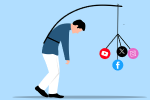
Meanwhile, we’re drowning our patrons—and ourselves—in a Huxleyan nightmare of infinite choice, weaponized engagement, and information designed to prevent the formation of selves capable of caring about books at all.
The data centers humming in the desert aren’t storing banned books.
They’re storing the behavioral profiles that ensure we never develop the attention span to read challenging books in the first place.”...
Infophilia, Jan. 3
| |

|
|
|
Hana Lee Goldin writes: “Recently, a client sent me their ‘thoroughly researched’ white paper on workplace automation.
It had 47 citations. Looked bulletproof. Every claim backed by a study, every statistic sourced to a journal.
I was impressed for exactly three minutes.
Of those 47 citations, 31 were what we call ‘hallucinations.’ Real academic citations are messy.
Artificial intelligence (AI) citations are suspiciously convenient.
They appear right when you need them, saying exactly what you need them to say.
In library school, they taught us something called ‘citation chaining,’ but I’ve adapted it for the age of AI hallucinations.”...
LLRX, Dec. 30
| |
|
Jorge A. Aguilar writes: “Google is finally rolling out a feature that lets users change their primary @gmail.com username without having to create an entirely new Google account.
This is great for those who use a silly or embarrassing address they now regret, or for people whose names or circumstances have changed.
Thankfully, this will keep all your stored data completely intact.
All the years of photos, Drive files, messages, and emails will not be lost just because you updated your username.
That's a massive relief because migrating years of digital life is always a nightmare.”...
How-To Geek, Dec. 25
| |
|
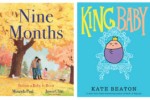
Jenny Arch writes: “Sometimes being a children’s librarian looks like reading books at storytime, blowing bubbles for babies, and putting out fresh coloring sheets.
And sometimes, it looks like listening as people tell you about a family dog who’s approaching death, or a new pregnancy that means a child is about to become a sibling, or an upcoming move out of state, or an impending divorce.
‘Do you have a book about that?’ they’ll ask, after revealing this big thing they’re facing, and yes, I do.
Here are just a few books on some of these subjects.”...
Jenny Arch, Dec. 22
| | |

|
|
|
American Libraries Direct is a free electronic newsletter emailed every Wednesday to personal members of ALA.
Editor, AL Direct: Greg Landgraf
Direct ad inquiries to: Melissa Carr
Send news and feedback: AL Direct
All links outside the ALA website are provided for informational purposes only. Questions about the content of any external site should be addressed to the administrator of that site. AL Direct FAQ.
American Libraries will not sell your email to outside parties, but your email may be shared with advertisers in this newsletter should you express interest in their products by clicking on their ads or content. If advertisers choose to communicate with you by email, they are obligated to provide you with an opportunity to opt-out from future emails in compliance with the CAN-SPAM act of 2003 and the European Union’s General Data Protection Regulation of 2018. Read the ALA privacy policy.
To manage your American Libraries email preferences, click here.
To unsubscribe from all ALA emails, click here.
American Library Association | 225 N. Michigan Avenue, Suite 1300 | Chicago, IL 60601
|
|
|
|
|
|
|
|




.jpg)