|
When did Gwendolyn Brooks become the first Black Pulitzer Prize winner? How many items make up the Martin Luther King Jr. Collection at Morehouse College in Atlanta? How many Zora Neale Hurston plays are held by the Library of Congress? Learn these fascinating facts and more in American Libraries’ By the Numbers column....
American Libraries Trend, Jan./Feb.
| |
|
Reanna Esmail writes: “Artificial intelligence has quickly made its way into library resources, services, and work. These four recent publications offer important criticisms, background information, and critical strategies for librarians to help distinguish between the hype and realities of this growing technology.”...
American Libraries column, Jan./Feb.
| |
|
The Public Library Association (PLA) will hold a webinar February 24 to help library staff know how to respond calmly, lawfully, and in ways that protect safety when agents from US Immigration and Customs Enforcement enter a public library.
The webinar is free to ALA members, and an archived recording will be available to registrants shortly after.
The PLA board has also issued a
statement regarding federal immigration enforcement in Minneapolis and the PLA 2026 conference to be held there April 1–3 with resources for local information, safe traveling to and around Minneapolis, virtual conference attendance, and opportunities to support Minneapolis libraries and librarians....
Public Library Association, Feb.
3; Public Libraries Online, Jan.
30
| |

|
|
|
“In December 2025, the Supreme Court declined to review a Fifth Circuit Court case about whether the government can remove books from a public library’s shelves. This guide provides an overview of the case and explains what it says about the right to read in libraries.
Without a Supreme Court decision to settle the issue, US courts are split, which means there are different rules for different states. In most states, it is unconstitutional for the government to remove books from people’s libraries, but library workers in Texas, Louisiana, and Mississippi must contend with an unprecedented inability to use their expertise to ensure that their libraries’ collections meet the needs of their communities.”...
Intellectual Freedom Blog, Jan.
30
| |
|
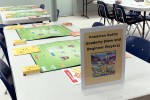
Ariel Barreras writes: “Like many of you, I currently have Pokémon on the brain! In December, I wrote about how I was
preparing to start a Pokémon Club at my library. In this post, I will share the setup for my first session and what I have learned after completing round one of Pokémon Club. The first session of a new program can be a tricky one, with kids and the librarian trying to figure out what works best.
Throughout the session, I was taking notes on what worked and what needs work.”...
ALSC Blog, Jan. 31, Dec. 11
| |
|
Catherine Paolillo and Christopher Marcum write: “This study gathered feedback from student employees on the elements of our retention program that they see as critical to retaining them throughout their time on campus.
Consistently positive feedback regarding flexible schedules and a supportive interview experience highlights the effectiveness of our hiring practices.
Strong appreciation for the structured onboarding and training process indicates that our efforts to provide consistent and thorough preparation are successful.
However, more work is needed to assess our need for direct day-to-day supervision for all students and to improve our performance appraisal process and specific work-preparation activities.”...
Library Leadership and Management, Vol.
39, No. 2, Feb. 1
| |

|
|
|
Angele Latham and Scott Broden write: “Nearly 3,000 books that were flagged as possibly running afoul of federal standards on gender topics were temporarily saved from removal from public library shelves across Rutherford County, Tennessee, on February 2. Instead, the board approved recommendations from Rutherford County Library Board Director Luanne James that would move 450 books out of the juvenile collection.
The review was spurred by an
October letter from Secretary of State Tre Hargett, which directed most public libraries in the state to review their juvenile collections conform to a Trump executive order on gender topics.”...
The Tennessean (Nashville), Feb. 3, Dec. 3
| |
|
David Lemmons writes: “To me, the relevance of information literacy in a person’s daily life is very clear.
What is online shopping if not an exercise in searching and verifying the information you find? The skills we teach in the library classroom are very applicable in a wide variety of contexts.
This isn’t obvious, though, to students or others who aren’t familiar with information literacy.
Why should they care about using filters on a database, or verifying the author of an article, when in their ‘real life’ these skills won’t be important? I’ve started taking the time in library instruction sessions to make this connection explicit.”...
Info Literal, Jan. 28
| |
|
Jerry Lawson writes: “When people think about malware, they often imagine someone clicking a suspicious attachment or downloading a shady file.
In reality, one of the most dangerous forms of infection requires no obvious mistake at all.
It’s called a drive-by download, and it remains a quiet but serious threat.
It occurs when malicious code is installed on a device simply by visiting a compromised website—often without any prompt or warning.
No defense is perfect, but layered precautions significantly reduce exposure.”...
LLRX, Jan. 29
| |
|
The RAILS regional library system in northern Illinois has published advocacy tools for libraries to build awareness about the challenges of e-book and audiobook pricing.
These documents include an advocacy flier, sample social media graphics, and sample copy that libraries can use to make their communities aware of this growing problem.
Libraries are also welcome to download a
Canva template to customize graphics with their own logos....
RAILS, Jan. 30
| |
|
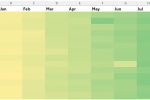
Tony Phillips writes: “In today's fast-paced world, where everyone seems to be in a rush, displaying data in a way that can be easily interpreted and analyzed—such as in a heat map—is essential. Excel lets you automatically color-code figures to demonstrate their relationship with one another, using darker colors for higher numbers and lighter colors for lower numbers, for example.
This means you can see trends and anomalies at a glance.”...
How-To Geek, Feb. 2
| |
|
Donna Seaman writes: “There’s nothing like a personal story well-told to illuminate facets of history and current social issues in ways that are relevant, relatable, and dramatic. The vivid and thoughtful memoirs below bring us into the lives of Black families and share deeply resonant experiences of hardships and healing, dreams and accomplishments.” This list was originally published in
Booklist Reader....
I Love Libraries, Feb. 2
| | |

|
|
|
American Libraries Direct is a free electronic newsletter emailed every Wednesday to personal members of ALA.
Editor, AL Direct: Greg Landgraf
Direct ad inquiries to: Melissa Carr
Send news and feedback: AL Direct
All links outside the ALA website are provided for informational purposes only. Questions about the content of any external site should be addressed to the administrator of that site. AL Direct FAQ.
American Libraries will not sell your email to outside parties, but your email may be shared with advertisers in this newsletter should you express interest in their products by clicking on their ads or content. If advertisers choose to communicate with you by email, they are obligated to provide you with an opportunity to opt-out from future emails in compliance with the CAN-SPAM act of 2003 and the European Union’s General Data Protection Regulation of 2018. Read the ALA privacy policy.
To manage your American Libraries email preferences, click here.
To unsubscribe from all ALA emails, click here.
American Library Association | 225 N. Michigan Avenue, Suite 1300 | Chicago, IL 60601
|
|
|
|
|
|
|
|






.jpg)