|
Phil Morehart writes: “Until recently, Caldecott Medal–winning author-illustrator Brian Selznick had never written for young adults, nor written a full-fledged love story. That changed with Run Away with Me (Scholastic, 2025), a YA novel about a transformative summer romance between two teenage boys in 1980s Rome that is interwoven with love stories spanning centuries in the Eternal City.
Selznick, known for the children’s books The Invention of Hugo Cabret and Wonderstruck, spoke with ALA’s How I Library podcast about finding revelatory love, building on cultural history, and why books scare those in power.”...
American Libraries Trend, Jan./Feb.
| |
|
Rob Bittner writes: “One of the questions I heard more than a few times over the course of the weekend of the
Youth Media Awards (YMA) announcement was ‘What’s going to happen with the YMAs moving forward?’ With all of the work of the Association for Library Service to Children’s (ALSC) reunification with the Young Adult Library Services Association, there have been many questions and concerns regarding the awards and the announcements.
Well, wonder no more! Beginning in 2028, the biennial ALSC National Institute will shift to an annual conference each January, aligning with the Youth Media Awards announcements.”...
ALSC Blog, Feb. 15
| |
|
Eleanor Ball writes: “Last fall, my library undertook an ambitious—and necessary—overhaul of our LibGuide catalog.
A couple weeks after starting as the new social sciences liaison, I was tasked with auditing the nearly 100 LibGuides in my subject areas and deciding which ones to remediate—and which ones to scrap.
The audit took about three months, and it was at times invigorating and at other times grueling.
Today, I want to share some of the lessons I learned from going through a major LibGuide weed as a new librarian.”...
ACRLog, Feb. 16
| |

|
|
|
Leigh-Ann Butler et. al. write: “Transformative agreements (TAs) are a relatively new type of journal package that typically includes both access to the publisher’s paywalled content and coverage of the open access publishing fees for an institution’s authors. As many libraries have entered into these agreements in recent years, analyses of their ‘value’ are increasingly being presented at conferences and in the literature.
However, these assessments often reveal inconsistencies in how TAs are defined.
We suggest exercising caution when using language that assesses the value of TAs and recommend considering several key questions to guide this reflection.”...
College & Research Libraries News, vol.
87, No. 2, Feb.
| |
|
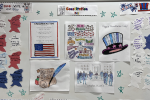
Aryssa Damron writes: “As a school librarian involved in a lot of community service groups outside of school, I love to use my students’ endless creativity to brighten up our community just a little bit.
In the two years since I moved from a public library to a school library, I’ve experimented with using different projects, many of which could be easy passive programming, to help my students engage in community service and volunteerism projects.
These are three of the most successful projects we’ve had to date.”...
ALSC Blog, Feb. 16
| |
|
Susan Haigh writes: “The US State Department has ordered certain public libraries nationwide to cease processing passport applications, disrupting a long-standing service that librarians say their communities have come to rely on and that has run smoothly for years.
The agency began issuing cease and desist orders to not-for-profit libraries in late fall, informing them they were no longer authorized to participate in the Passport Acceptance Facility program as of February 13. ALA estimates about 1,400 libraries nationwide could be affected” at a time when demand is surging due to
Real ID requirements,
potential new voting rules, and
immigration raids. ALA has
endorsed a bipartisan bill to allow all public libraries to serve as passport acceptance facilities....
Associated Press, Feb.
13; Feb. 11; Jan. 30; Dec. 1, 2025; ALA Public Policy and Advocacy Office, Feb.
13
| |

|
|
|
Madison Dearnaley writes: “Do you ever wish you promoted and marketed your library more? I certainly do. I feel there are so many opportunities I miss to promote the libraries services and resources.
But before I know it, the term has disappeared and I’ve hardly managed to make the school newsletter deadlines (and to be honest, I miss some of those as well). So, I’ve decided to be a little bit more organized and strategic about my marketing this semester.”...
Madison’s Library, Feb. 12
| |
|
Ximena Conde and Aubrey Whelan write: “The bitter cold of recent weeks was so dangerous that various Philadelphia agencies coalesced around one mission: Get the city’s most vulnerable off the streets.
Libraries became a key piece in these efforts, with some branches doubling as so-called warming centers.
The mobilization is largely, though not universally, welcomed by library staff, the community groups that support the workers, and the people who use the spaces.
But employees say the warming center initiative leaves branch staff unequipped to help some of the people walking through their doors with complex needs.”...
Philadelphia Inquirer, Feb.
11
| |
|
Jennie Langberg writes: “If we view the idea of ‘place’ as a spectrum, secondary school libraries lie somewhere in the middle of students’ second place (school) and a true third place.
During the day, my library is open for drop-in student browsing, make-up testing, printing, and more.
After school, we are open until the late bus arrives at 4:30 p.m., and the library shifts towards a true ‘third place.’ I love that students feel welcome enough in our school library to make it their third place.
And yet, unstructured social time comes with its problems.”...
The Library Lab, Feb.
16
| |

|
|
|
Glyneva Bradley-Ridout writes: “Upon first consideration, it may seem that play does not have a place in academic library spaces.
Play in academic library spaces may invoke images of mayhem and revelry, loud noises, and unseriousness.
How can this setting and these activities go hand in hand? But play has benefits in adulthood, such as enabling adults to cope more effectively with stress, to sustain overall emotional health, and to increase enjoyment of life.”...
Canadian Journal of Academic Librarianship, Feb.
13
| |
|
David Nield writes: “There’s little worse than losing an hour or two of hard work, just by clicking on the wrong button or pressing the wrong key in Microsoft Word—a mistake that sees your well-crafted document (or a sizable portion of it) disappear before your eyes.
Or maybe you just have the misfortune to be busy at your computer when a power outage happens, taking your unsaved work along with it.
However, before you begin all over again, there are some tricks you can try to bring your work back.”...
Lifehacker, Fab. 17
| |
|
Laura Ratliff writes: “Brooklyn Public Library (BPL) is turning the page on immigration conversations with a
brand-new reading list designed to spark empathy, curiosity and deeper understanding—and it arrives at a moment when the topic feels especially charged nationwide.
Curated by BPL librarians, the new ‘In Celebration of Immigrants and Immigration’ list brings together dozens of titles for kids, teens, and adults that explore the emotional realities of migration, identity, and belonging.
The selection is intentionally human-driven.”...
Time Out New York, Feb.
12
| | |

|
|
|
American Libraries Direct is a free electronic newsletter emailed every Wednesday to personal members of ALA.
Editor, AL Direct: Greg Landgraf
Direct ad inquiries to: Melissa Carr
Send news and feedback: AL Direct
All links outside the ALA website are provided for informational purposes only. Questions about the content of any external site should be addressed to the administrator of that site. AL Direct FAQ.
American Libraries will not sell your email to outside parties, but your email may be shared with advertisers in this newsletter should you express interest in their products by clicking on their ads or content. If advertisers choose to communicate with you by email, they are obligated to provide you with an opportunity to opt-out from future emails in compliance with the CAN-SPAM act of 2003 and the European Union’s General Data Protection Regulation of 2018. Read the ALA privacy policy.
To manage your American Libraries email preferences, click here.
To unsubscribe from all ALA emails, click here.
American Library Association | 225 N. Michigan Avenue, Suite 1300 | Chicago, IL 60601
|
|
|
|
|
|
|
|






.jpg)