|
Dan Montgomery writes: “These past few months as executive director have been a whirlwind learning experience—unlike anything else in my life—and I have enjoyed the heck out of it.
One of the most powerful insights I’ve gained is a deeper understanding of our Association’s advocacy work: what it truly means to advocate for libraries, for librarianship, for all library workers, and for the right to read and access information equitably and freely across our nation.”...
American Libraries column, Mar./Apr.
| |
|
Zoë McLaughlin writes: “It’s March, which means the Americans with Disabilities Act (ADA) Title II deadline for large institutions is looming near.
I spend roughly 25% of my time on accessibility, meaning that Title II is top of mind for me right now.
The ADA has been in place since 1990—it isn’t new—but there have been some recent changes, especially with regard to electronic resources.
One facet of our response to Title II has been focusing on web accessibility.
This means making sure that library users can access, read, and use library webpages and other electronic materials.”...
ACRLog, Mar. 7
| |

|
|
|
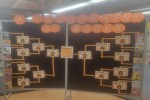
Jessica Brownley writes: “March Madness isn’t just for basketball—it’s a perfect theme to get kids excited about reading.
At our library, we combined the thrill of the tournament with a love of books by hosting a Tournament of Book Characters.
It’s a creative way to combine literacy and fun, giving kids a hands-on, interactive reading experience that mirrors the excitement of sports tournaments.
With a visually engaging bracket, clear voting options, and a variety of books, your library can make March Madness memorable for all young readers.
Here’s how we set it up.”...
ALSC Blog, Mar. 9
| |
|
Jeff Trexler writes: “H.R. 7661 is an unconstitutional campaign-year ploy that even its sponsors don’t think will pass. Its real aim: to get free press as the defenders of children while making it look like our agenda is to sexualize kids in schools.
Should we be playing their game? Behind the scenes we’ve been working to make sure that it will die, but rather than keeping it in the headlines as the focus of our free speech campaigns, we should simply dismiss it as the transparent campaign gimmick that it is.”...
Comic Book Legal Defense Fund, Mar.
7
| |
|
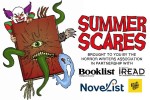
The Horror Writers Association has issued its 2026
programming guide for
Summer Scares, a reading program that provides libraries and schools an annual list of recommended horror titles for adult, young adult, and middle grade readers.
The program operates in partnership with Booklist, Book Riot, NoveList, and iREAD.
The guide offers discussion group questions, booktalking suggestions, sample programs, and read-alikes for each selected book....
RA For All, Mar. 4
| |

|
|
|
Anth Sinnott writes: “In the digital library, statistics are ubiquitous.
We are currently awash in an exhausting volume of data, from COUNTER 5.1 reports to granular platform analytics that promise to underpin our collection strategies.
When harnessed correctly, this data is the engine of a truly dynamic service.
It allows for just-in-time acquisition and a responsive, data-driven strategy that mirrors the actual needs of our researchers and students in real-time. However, there is a darker side to this deluge.
Data can be weaponized.”...
Librarianth, Mar. 9
| |
|
Janet French writes: “Alberta school divisions complying with a provincial order have removed dozens of graphic novels from their shelves, from illustrated versions of literary classics to coming-of-age memoirs and dramatic retellings of mythology, access to information request results show.
Staff at every Alberta school had to review their library and classroom collections last fall when Alberta’s education minister, Demetrios Nicolaides, ordered schools to remove any material containing any explicit depiction of a sexual act.
Nicolaides’ interest in reviewing books available to students came at the prompting of the members of two interest groups—Action4Canada and Parents for Choice in Education.”...
Canadian Broadcasting Corporation News, Mar.
9
| |
|
Greyson Pasiak writes: “Academic librarians are increasingly tasked with creating and implementing new policies and ethical guidelines surrounding generative artificial intelligence’s (AI) role in research and publishing practices.
They are called through vocational language to educate on safe, transparent, and responsible use of AI.
These new roles and responsibilities are coupled with insufficient time and general support, resulting in faculty and staff feeling fatigued.
Many have already addressed how fatigue in higher education can ultimately lead to interruptions in publishing support and academic research if not addressed.”...
The Scholarly Kitchen, Mar.
4
| |

|
|
|
Hana Lee Goldin writes: “Most of us might experience algorithmic curation as helpful.
The system learns our preferences and filters out what seems irrelevant.
But the filter doesn't distinguish between content we don't want and content we've simply never encountered.
It removes both—including ideas, opportunities, and perspectives we might value if we knew they existed.
Each prediction based on our past behavior assumes our future interests will mirror our history.”...
Card Catalog, Mar. 10
| |
|
Marissa Levien writes: “Reading goals aren’t a new phenomenon—there’s a whole generation of us who grew up with the promise that, if we read a certain number of books in a summer, our local library would be obligated to throw us a pizza party.
But if we’re gamifying our reading, we stop reading widely: we pick different versions of a story that we are guaranteed to like, and with that we lose a sense of well-roundedness, a sense of discovery and surprise.
On a deeper level, it also means that we give up the art of reading slowly.”...
Literary Hub, Mar. 5
| |
|
Oluwademilade Afolabi writes: “Most people who use Microsoft Word daily still don’t know that Spike exists, and that’s a shame. It’s not tucked behind a subscription wall or buried in a settings menu nobody opens.
It's right there, bound to a keyboard shortcut, waiting.
I stumbled across it while trying to rearrange a lengthy report without endlessly cycling through copy-paste operations, and it has changed the way I think about editing in Word.
It's a secondary clipboard that accumulates multiple chunks of content and holds them all until you're ready to drop them exactly where you need them.”...
MakeUseOf, Mar. 6
| | |

|
|
|
American Libraries Direct is a free electronic newsletter emailed every Wednesday to personal members of ALA.
Editor, AL Direct: Greg Landgraf
Direct ad inquiries to: Melissa Carr
Send news and feedback: AL Direct
All links outside the ALA website are provided for informational purposes only. Questions about the content of any external site should be addressed to the administrator of that site. AL Direct FAQ.
American Libraries will not sell your email to outside parties, but your email may be shared with advertisers in this newsletter should you express interest in their products by clicking on their ads or content. If advertisers choose to communicate with you by email, they are obligated to provide you with an opportunity to opt-out from future emails in compliance with the CAN-SPAM act of 2003 and the European Union’s General Data Protection Regulation of 2018. Read the ALA privacy policy.
To manage your American Libraries email preferences, click here.
To unsubscribe from all ALA emails, click here.
American Library Association | 225 N. Michigan Avenue, Suite 1300 | Chicago, IL 60601
|
|
|
|
|
|
|
|




.jpg)