|
Sallyann Price writes: “As ALA celebrates 150 years, we’re drawing inspiration from key events since its 1876 founding: from the first conventions and library schools, through wartime and the fight for civil rights, to seismic technological advancements and the existential threats of the current moment.
Though not a comprehensive timeline of library history, the milestones collected here demonstrate lasting impact and how libraries and the profession are intertwined with the American story itself—as repositories of memory, arenas of debate, and enduring instruments of democratic life.”...
American Libraries feature, May
| |
|
Marshall Breeding writes: “The library technology industry is at a critical juncture, driven by uncertainties in funding and disruptions in technology, particularly around artificial intelligence.
Business transitions have included changes in executive leadership, acquisitions, and new ownership.
Nevertheless, most vendors advanced along their development road maps, with some launching new or improved products.
Despite current economic challenges, vendors providing technology products and services can expect good opportunities ahead.
Many libraries that have been deferring system replacements may move to replace their outdated products with modern services.”...
AL Online feature, May 5
| |
|
Sam Helmick writes: “In 1876, 103 dreamers gathered in Philadelphia.
These librarians and library advocates came to weave a vision of libraries as lanterns in the night, as havens of thought, as places where minds and hearts could be set free.
From that gathering, ALA was born.
Today, we stand at 150 years, a century and a half of voices lifted, stories shared, and doors opened.
Through wars and unrest, through the whirlwind of change, ALA has held fast to a simple truth: Knowledge belongs to all, and all who seek it deserve to find it.”...
American Libraries column, May
| |

|
|
|
On April 30, ALA and the Banned Books Week Coalition unveiled the artwork for Banned Books Week 2026, October 4–10. The 2026 theme is “Let Books Be. Protect the Freedom to Read.” This year’s Banned Books Week campaign features three illustrations showing how libraries and access to information enrich our lives.
The artwork from award-winning illustrators Hyesu Lee, Loveis Wise, and Mikey Burton embraces joy and creativity as acts of resilience, reminding our communities that a handful of people running organized censorship campaigns should not be allowed to dictate what the rest of us can read....
ALA Office for Intellectual Freedom, Apr.
30
| |
|
Grammy-winning composer, singer, producer, and multi-instrumentalist Laufey has been named honorary chair of Library Card Sign-up Month. An enthusiastic reader, she founded the Laufey Book Club in 2022 helping to foster a global community of readers.
Last year, Laufey partnered with four US public library systems and one in her native Iceland to launch limited edition Laufey Book Club collaborative library cards and encourage library card sign-ups. Libraries interested in launching a collaborative card this year should complete the
enrollment form by July 10....
ALA Communications and Media Relations Office, May 5
| |
|
Peter Blenski writes: “Every children’s librarian knows that a scavenger hunt is an easy way to keep kids occupied in the library.
But what if every library in your system participated in the same scavenger hunt? That’s what Emily Heller, public communications coordinator for Bridges Library System in southeastern Wisconsin, did for her system.
The program was not only a big hit with kids, but also with adults and families looking for adventure over summer.”...
ALSC Blog, May 3
| |
|
Mars Brint writes: “In honor of
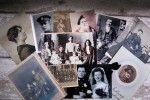
Preservation Week, I’d like to discuss the importance and enjoyment of digging through old records.
People want to know their history, understand their roots, and create a connection with the past, and it is such a pleasure to be able to help bridge that information and share resources.
So I’ve decided to include some of my own basic tips, tricks, and resources that can help others find genealogical information in a pinch.”...
NMRT Notes, May 1
| |
|
On April 30, ALA and partner organizations in the Schools, Health, and Libraries Broadband Coalition expressed disappointment following the Federal Communications Commission's (FCC) vote to establish a new competitive bidding portal that may increase burden to applicants for the federal E-Rate program. FCC Chairman Brendan Carr wrote that the portal “brings greater transparency and consistency to the bidding process.” However, a recent
Government Accountability Office report found that the E-Rate program had already adopted all recommended requirements and best practices to promote program integrity.
Attend a free webinar June 3 to learn more about the decision and what it means for libraries....
ALA Public Policy and Advocacy Office, Apr.
30; FCC Blog, Apr. 8; US Government Accountability Office, Dec.
2025
| |
|
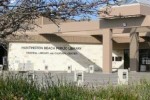
Claire Wang writes: “Huntington Beach, California, must foot roughly $1 million in legal bills for restricting minors’ access to certain books at the city’s library, an Orange County judge ordered.
In a
tentative ruling April 27, Orange County Judge Lindsey Martinez said the city needs to pay $960,000 to attorneys from four legal organizations, who billed more than 1,300 hours of work on the high-profile lawsuit against the city’s book restriction policy.
Martinez had
ruled in September that the city’s book restriction policy violated the state’s Freedom to Read Act and cannot be enforced,” although an appeal is pending....
Orange County (Calif.) Register, Apr. 30; Sept. 5, 2025
| |

|
|
|
Aaron Tay writes: “Evaluation frameworks are a serious thread in information literacy, collection assessment, and procurement.
The demand for them is real.
My worry is that many evaluation matrices try to do too much at once.
They aim to be universal.
They give every criterion a score.
They weight too many things equally.
They also rely heavily on qualitative impressions, including for the thing that matters most when evaluating search tools: Whether the tool can retrieve and rank useful material.”...
Aaron Tay’s Musings about Librarianship, Apr.
29
| |
|
Thomas W. Ganzevoort writes: “Columbus (Ga.) State University’s Simon Schwob Memorial Library is home to one obsolete feature: the library’s loading dock, an original part of the 1975 structure. Rarely used after the library basement was renovated in 2012, the loading dock was repurposed as a patio deck.
A 2019 renovation added safety gate and railing, a fresh coat of paint and some picnic tables.
However, something was still missing.
During Spring Break 2026, what has become known as the Library Mural Project reached its fruition, when an army of volunteers descended on the loading dock to make the mural a reality.”...
Georgia Library Quarterly, vol.
63, no. 2, May 1
| |
|
Adrienne De Luna writes: “Passive programming gets a bad reputation.
But in the right environment—especially in youth services—passive programming isn’t just helpful. It’s essential. Not all passive programming works.
And when it doesn’t, it’s usually not because of the idea—it’s because of the execution.
Most passive programs fall flat when they are too complicated, not immediately visible, overexplained, not relevant to the age group, or left out too long.”...
Youth Services Playbook, May 1
| | |

|
|
|
American Libraries Direct is a free electronic newsletter emailed every Wednesday to personal members of ALA.
Editor, AL Direct: Greg Landgraf
Direct ad inquiries to: Melissa Carr
Send news and feedback: AL Direct
All links outside the ALA website are provided for informational purposes only. Questions about the content of any external site should be addressed to the administrator of that site. AL Direct FAQ.
American Libraries will not sell your email to outside parties, but your email may be shared with advertisers in this newsletter should you express interest in their products by clicking on their ads or content. If advertisers choose to communicate with you by email, they are obligated to provide you with an opportunity to opt-out from future emails in compliance with the CAN-SPAM act of 2003 and the European Union’s General Data Protection Regulation of 2018. Read the ALA privacy policy.
To manage your American Libraries email preferences, click here.
To unsubscribe from all ALA emails, click here.
American Library Association | 225 N. Michigan Avenue, Suite 1300 | Chicago, IL 60601
|
|
|
|
|
|
|
|






.jpg)