|
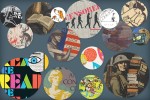
“From wartime appeals to celebrity-studded reading campaigns, library posters have long captured the evolving role of libraries in American life.
This feature traces ALA’s history through some of its most iconic visuals—the patriotic mobilization of ALA’s Library War Service, the pop-culture energy of its READ posters, the spirited encouragement of the ‘Wake Up and Read’ campaign, and the fearless advocacy of Banned Books Week.
Together, these images chart a story of the profession’s unflinching ideals of access, literacy, and intellectual freedom, showcasing how libraries continue to reimagine their place in public life.”...
American Libraries feature, May
| |
|
Robin Camille Davis writes: “If there’s one piece of advice I have for updating lots of web pages or documents, it’s this: Turn it into a party.
If your library’s staff is facing a huge amount of drudge work, like updating a hundred documents manually, you can make the task approachable by coordinating an edit-a-thon, an event in which staff members gather in a room for a couple of hours to tackle editing together.
The edit-a-thon could take the form of a LibGuides shindig, a website cleanup, or an accessibility event.”...
Choice 360 LibTech Insights, May 18
| |
|
Karin Greenberg writes: “For centuries, poets have attempted to put words to profound experiences.
Using the monumental event of the Artemis II mission, I decided to challenge my high school students to give it a try.
For this year’s April poetry competition, I asked them to write a poem focusing on the theme of time and space.
A familiar refrain that high school educators hear from students is ‘How will this have anything to do with life?’ When we pair real events, especially intriguing ones, with literature and writing skills, we’re more likely to engage learners.”...
Knowledge Quest, May 19
| |
|
While front-facing book displays are eye-catching and great, spines and spine labels are still the workhorses in the library stacks. The options for labeling, color-coding, and classifying seem endless, but spine space is limited and precious. It’s crucial to use the space thoughtfully so your visitors spend more time reading and less time searching. How do you decide which labels to choose and use?
Click here to read the full blog post.
|
| |
|
Eleanor Ball writes: “With summer break around the corner, I’m eagerly beginning to plan what books I might read this summer.
I’m also reflecting on the books I read this year as I prepared to teach my own course, an artificial intelligence (AI) literacy elective, for the first time.
Today, as we ease ourselves into summer break, I want to share four quickfire reviews of books I’ve recently read about pedagogy and AI.
If you’re looking for something to read this summer, I hope you find something intriguing in this list!”...
ACRLog, May 14
| |
|
Phil Morehart writes: “Taylor Swift, Beyoncé, The Go-Go’s, Vince Gill, Chaka Khan, and Weezer are some of the most successful musical artists in the world, and they’ve now been enshrined in the Library of Congress.
On May 14, Acting Librarian of Congress Robert R.
Newlen announced the latest round of recordings that will
join the National Recording Registry. The 25 selections were chosen as audio treasures worthy of preservation for all time based on their cultural, historical, or aesthetic importance in the nation’s recorded sound heritage.”...
I Love Libraries, May 15
| |
|
Marydee Ojala writes: “Contingency plans should start with the premise that no library is completely immune from attack.
In the case of the late April Canvas attack, the library can take on the role of help desk, as students may not know where else to turn for accurate information and will need advice, explanations, and a personalized roadmap of what to do next.
This was not simply downtime; this was a major security breach.
Warn students about the possibility of phishing emails.
Look at existing collections that can provide alternatives to data provided on the Canvas platform.”...
Information Today Europe, May 12
| |

|
|
|
Matt Hollingsworth writes: “Alex Haley’s book Roots is included in an updated list of book titles to be removed from Knox County (Tenn.) Schools libraries. The schools
previously removed other books from shelves due to the Age-Appropriate Materials Act including Water for Elephants, A Court of Thorns and Roses, and A Clockwork Orange. The state passed the
Age Appropriate Materials Act in 2022, requiring schools to have a list of materials in their libraries and to have a policy for reviewing them for age appropriateness.” Roots is one of Tennessee’s
state books, and members of the county Board of Education have
pushed back against the removal....
WATE-TV (Knoxville), May 14; May 22, 2025; Aug. 30, 2022; WKRN-TV (Nashville), Mar. 29, 2024; WBIR-TV (Knoxville), May 18
| |
|
Stony Evans writes: “My first year back in a school library was a challenge.
After five years balancing roles as an Army National Guard company commander and a public library administrator, I had forgotten the sheer pace of the K–12 world. As the final weeks of the year arrived and the shelves began to fill back up for summer, I decided to try something new.
I wanted to see the year through the lens of a student.
How did the library impact them? What would they remember? The feedback didn't just surprise me; it recharged me.”...
Library Media Tech Talk, May 13
| |
|
Mia Kortright writes: “Congressional Republicans denied US Rep.
Adelita Grijalva’s (D-Ariz.)
request for $650,000 in maintenance and restoration at Copper Queen Library in Bisbee, a refusal she said was because the library held events featuring performers in drag in 2019 and 2024. Of the numerous projects Grijalva submitted to the Agriculture, Rural Development, Food and Drug Administration, and Related Agencies Subcommittee for funding, it was the only one that was rejected, she wrote in a
news release.”...
Tucson (Ariz.) Sentinel, May 8
| |

|
|
|
Ellen Carroll, Tracy Bergstrom, and Ioana G.
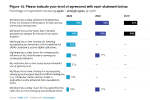
Hulbert write: “Every three years Ithaka S+R administers a survey of academic library deans and directors to better understand how they conceptualize their work—what they prioritize, how they make decisions, and how they align the library to their parent institution’s mission. Today, we are pleased to share
findings from the 2025 cycle, which offer a current view of a library sector that is increasingly operating under pressure.”...
Ithaka S+R, May 14
| |
|
Lily Ray writes: “Over the past several months, I have been monitoring more than 220 websites that were publicly identified as customers of various AI content creation, automation, and scaling platforms.
Many of these tools also now focus on driving visibility, mentions, and citations in AI search responses.
A consistent pattern emerged: It works, until it doesn’t. The data makes clear that scaling content production with AI is not a low-risk strategy for organic search.
It can produce real short-term gains in both search engine optimization and AI search, but across this data set, those gains have rarely held.”...
Search Engine Journal, May 18
| |
|
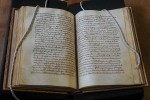
Andrea Rosa writes: “The researchers in Ireland looked at their computer screen, marveling at a 9th-century book in a Roman library.
They flipped through its digitized pages and found their treasure: the oldest surviving English poem.
Composed in Old English by a Northumbrian agricultural worker in the 7th century, ‘Caedmon’s Hymn’ appears within some copies of the Ecclesiastical History of the English People. The discovery sheds light on the English language’s wide diffusion, long before what was previously understood,” The earliest printed version of the poem previously known dates from the 12th century, although two earlier texts included it as marginalia....
Associated Press, May 17
| | |

|
|
|
American Libraries Direct is a free electronic newsletter emailed every Wednesday to personal members of ALA.
Editor, AL Direct: Greg Landgraf
Direct ad inquiries to: Melissa Carr
Send news and feedback: AL Direct
All links outside the ALA website are provided for informational purposes only. Questions about the content of any external site should be addressed to the administrator of that site. AL Direct FAQ.
American Libraries will not sell your email to outside parties, but your email may be shared with advertisers in this newsletter should you express interest in their products by clicking on their ads or content. If advertisers choose to communicate with you by email, they are obligated to provide you with an opportunity to opt-out from future emails in compliance with the CAN-SPAM act of 2003 and the European Union’s General Data Protection Regulation of 2018. Read the ALA privacy policy.
To manage your American Libraries email preferences, click here.
To unsubscribe from all ALA emails, click here.
American Library Association | 225 N. Michigan Avenue, Suite 1300 | Chicago, IL 60601
|
|
|
|
|
|
|
|





.jpg)