EDITOR'S NOTE
Watch for American Libraries’ Daily Scoop e-newsletters June 26–29, featuring coverage of ALA’s Annual Conference. AL Direct’s July 1 issue will recap the event. | | |
|
Jennifer Billock writes: “We’ve compiled a master list of restaurants and cafés to try while attending the 2026 Annual Conference and Exhibition.
From healthy breakfasts to decadent splurges and feasts, these establishments will provide whatever you need to keep your energy up for a long day of learning or feed your soul afterward.
Replace the standard tourist-trap meals with big and bold flavors from around the world.
All the spots mentioned, organized by neighborhood, are easily accessible by public transit, a leisurely walk, or a quick ride share from McCormick Place.”...
American Libraries feature, Summer
| |
|
Marshall Breeding writes: “The library technology industry is at a critical juncture, driven by uncertainties in funding and disruptions in technology, particularly around artificial intelligence.
Business transitions have included changes in executive leadership, acquisitions, and new ownership.
Despite these shakeups, most vendors advanced along their development road maps, with some launching new or improved products.”...
American Libraries feature, Summer
| |
|
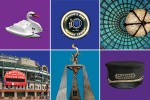
Want to get away from the hustle of conference and into the bustle of American Libraries’ home city? Here you’ll find staff members’ favorite jaunts—from neighborhoods gems to tourist attractions—just a bus, train, or bike ride away.
Chicago’s grid system makes it an easy place to explore in between sessions, signings, and celebrations.
Originally published for the 2023 Annual Conference, this overview contains recommendations that remain Chicago favorites....
American Libraries feature, June 2023
| |

|
|
|
Macy Kinney writes: “Playwork,
according to the Play Foundation, is ‘an approach to working with children that aims to support and facilitate the play process—and the profession that practices this approach.’ Playwork has its roots in the adventure playground of the UK and Europe, so is less familiar to those of us in the US.
Playwork professionals, like children’s librarians, include reflexive practice, audits of their space, and critically examining the rules of a space as they impact children.
We can apply tools we already use to looking at how play functions in our libraries.”...
ALSC Blog, June 22
| |
|
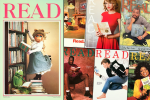
ALA has started an auction of a rare selection of more than 200 READ posters, spanning decades of library promotion, advocacy, and pop culture history.
Bidding began June 18, with a live online auction taking place July 10. Among the highlights are sought-after posters featuring Shaquille O’Neal, Taylor Swift, Yoda, the cast of Buffy the Vampire Slayer, and WWE personalities, along with autographed posters from more than 30 celebrities including Michael J.
Fox, Bette Midler, Paul Newman, Sting, and Oprah Winfrey.
See the full catalog and bid at
Heritage Auctions....
ALA Communications and Media Relations Office, June 18
| |
|
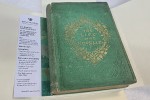
Judith L. Silva and Zachary Voras write: “Academic libraries face the challenge of what Melissa Tedone and Rosie Grayburn called ‘poison books.’ Researchers at large institutions are conducting studies of library holdings, testing books for heavy metals, identifying health and safety guidelines, and sharing new knowledge via published case studies.
Small- to mid-sized academic libraries, however, may lack equipment, expertise, funding, or time to investigate their holdings, or the space to safely segregate such items, and must develop their own strategies to address health and safety issues surrounding bibliotoxicology.
This case study explores activities at a medium-sized public university.”...
RBM: A Journal of Rare Books, Manuscripts, and Cultural Heritage, vol.
27, no. 1, Spring
| |

|
|
|
Jennifer Chapman writes: “Efficiency is one of the main selling points for new artificial intelligence (AI)-powered tools, but efficiency is oftentimes the result of the AI tool and invisible human labor.
Reading a
white paper from Glean’s Work AI Institute about AI’s hidden human labor made me think about the invisible labor librarians are doing.
This post looks at some of the ways law librarians are performing this labor and creating an illusion of efficiency for primary users.”...
RIPS Law Librarian Blog, June 19; Glean Work AI Institute, June 10
| |
|
Beatrice Downey, Courtney Shareef, and Natalia Umaña write: “With the recent rise of anti-diversity, equity, and inclusion legislation across state and federal levels came the sunsetting of many initiatives intended to increase underrepresented demographics in various industries.
As early as 2024, resident librarians worried about the longevity of diversity residency and fellowship programs, which were designed to recruit and train Black, Indigenous, and people of color (BIPOC) librarians. During the 2025–2026 academic year, we confirmed what others suspected: A large number of library residency and fellowship programs were ending or pausing their programs.”...
WOC+lib, June 17
| |
|
Jane Friedman writes: “Last week, I received a press release from the Authors Guild about their latest study on why authors’ incomes are declining, a story that’s been making the rounds in the media.
At the
Authors Guild website, in the report’s key findings, libraries are strongly implied to be a factor in declining author incomes.
I urge caution in drawing such a conclusion from this particular study.
Here’s why.”...
JaneFriedman.com, June 17; Author’s Guild, June 9
| |

|
|
|
Christin Monroe, Cameron Pilato, and Ari Weinshenker write: “Have you ever had a student fail to submit a research assignment—even though you’re fairly certain they spent a great deal of time working on it? Have you worked with a student who asks what feels like too many questions, or none at all? Have you seen students dramatically undershoot—or overshoot—the expectations for an assignment? Too often, these moments are interpreted as signs of low motivation, poor time management, or disengagement.
But our shared experience suggests something else: Many students aren’t underthinking their academic work.
They’re overthinking it.”...
Info Literal, June 17
| |
|
Adaeze Uche writes: “Even if you've never written one yourself, you've probably seen a formula that stretches so far across Excel's formula bar that you don't even bother trying to make sense of it.
With so many moving parts, it's easy to lose track of what the formula is actually supposed to achieve.
I've found LET to be the best fix for this.
It's an Excel function borrowed from programming that makes complex formulas significantly easier to read, write, and maintain, and it hasn't failed me yet.”...
MakeUseOf, June 22
| |
|
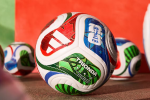
James Whitfield writes: “With the 2026 FIFA World Cup now underway, there has never been a better moment to understand what the World Cup actually is: where it came from, how it grew, and why it matters in ways that go far beyond the sport itself.
These are the best books about the World Cup ever written.
Whether you want the complete historical sweep, the inside story of a single tournament, or the biography of the player who defined an era, this list has it.”...
World Cup Tribune, May 16
| | |

|
|
|
American Libraries Direct is a free electronic newsletter emailed every Wednesday to personal members of ALA.
Editor, AL Direct: Greg Landgraf
Direct ad inquiries to: Melissa Carr
Send news and feedback: AL Direct
All links outside the ALA website are provided for informational purposes only. Questions about the content of any external site should be addressed to the administrator of that site. AL Direct FAQ.
American Libraries will not sell your email to outside parties, but your email may be shared with advertisers in this newsletter should you express interest in their products by clicking on their ads or content. If advertisers choose to communicate with you by email, they are obligated to provide you with an opportunity to opt-out from future emails in compliance with the CAN-SPAM act of 2003 and the European Union’s General Data Protection Regulation of 2018. Read the ALA privacy policy.
To manage your American Libraries email preferences, click here.
To unsubscribe from all ALA emails, click here.
American Library Association | 225 N. Michigan Avenue, Suite 1300 | Chicago, IL 60601
|
|
|
|
|
|
|
|






.jpg)