|
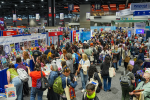
Sallyann Price writes: “Chicago was an apt host for the ALA’s 2026 Annual Conference and Exhibition, marking both ALA’s 150th anniversary and the nation’s 250th birthday. At the Opening General Session, journalist, author, and podcaster Rachel Maddow set the tone for a convening that was both celebratory and deeply reflective on what’s happening in the world.
Shifting demographics, rapid advances in technology, and the rise of authoritarianism are all affecting how libraries serve their communities.
Maddow wasn’t the only speaker to draw inspiration from the challenges of these times.”...
American Libraries Online feature, July 14
| |
|
Maria McCauley writes: “For 30 years, E-Rate has been one of America’s most visionary programs, opening the doors of digital opportunity to every community in our nation.
But now E-Rate is under threat.
Opponents argue that because E-Rate has succeeded, we no longer need it.
But just as our streets and roads require ongoing investment, so too does our digital infrastructure.
A digitally connected America—across rural, urban, and tribal lands alike—is a stronger America.” Learn more about proposed changes to E-Rate and how to contribute to advocacy to protect the program at a
July 16 webinar....
American Libraries Online column, July 14
| |
|
In a column adapted from a presentation at the Recharging in Challenging Times ALA virtual event in February, Darcy Lipp-Acord writes: “What I find concerning are the abusive communication and behavior patterns I see being used by many who attempt to challenge books, ban books, and ‘protect children.’ Patterns I have pointed out to my staff include character assassination, disinformation, gaslighting, minimizing, and volatility.
How do we prepare ourselves for these interactions?”...
American Libraries column, Summer
| |
|
Spacesaver’s Flexible Shelving is engineered to securely store and display media of all shapes and sizes and can be easily relocated to fit the day’s needs. Flexible Shelving’s reconfigurable design makes it the ideal solution for creating functional space on the fly, as their easy-to-operate, robust casters allow for users to not only quickly maneuver systems into place, but also to do so fully loaded—reducing downtime and potential damage from overhandling.
Available in a variety of customizable end-panel finishes, Flexible Shelving can seamlessly integrate into your library’s aesthetic.
Learn more.
|
| |

|
|
|
Whitney Christopher writes: “As concerns about data privacy continue to grow and become increasingly difficult to navigate, libraries play an important role in helping patrons make informed decisions.
A key challenge is ensuring patrons understand what happens to their data when they access third-party vendor websites, particularly in cases where tracking and data collection are not immediately visible.
An ongoing project within Cornell University Library examines vendor privacy policies alongside the data collected by vendor platforms.
The goal is to better align what vendors say in their policies with what their websites actually do, while also improving transparency for patrons.”...
Choice 360 LibTech Insights, July 13
| |
|
Jose Ruiz-Vazquez writes: “Public libraries are dealing with budget cuts, book bans, and the usual existential questions about whether anyone needs physical collections when they can Google everything.
And now artificial intelligence (AI) shows up, and everyone assumes libraries are about to get steamrolled by it too.
But watch what’s happening at reference desks: Patrons ask how to determine whether an IRS email is real or a phishing attempt.
Small business owners are trying to figure out which AI tool won’t steal their marketing copy.
These aren’t edge cases. This is what reference work looks like now.”...
Public Libraries Online, July 12
| |

|
|
|
Kelly Jensen writes: “If there were a single word to capture the state of library cuts across the US, it would be ‘rough.’ It’s rough not only for public libraries but also for school and academic libraries.
This is not a comprehensive look at library cuts in 2026. It can’t be. Most of the time, these stories—especially ones about ‘smaller’ cuts to library materials budgets or to popular databases—don’t make the news. But this sampling is representative of what’s happening across libraries in the US right now.”...
Well Sourced, July 11
| |
|
Mackenzi Klemann writes: “Hoosiers suffering mental health crises are visiting public libraries for help—transforming the role of librarians who act simultaneously as researchers, archivists, and quasi–social workers. Mental Health America of Indiana is stepping in to train librarians in how to respond to these crises and direct patrons to reliable information on suicide prevention, addiction treatment, and mental health disorders.
Todd Grooten, a licensed social worker and co-chair of the Indiana Library Federation’s mental health committee, welcomed the opportunity as library staffers like himself increasingly encounter people in crisis seeking internet access and other resources from public libraries.”...
Indiana Capital Chronicle, July 9
| |
|
Nick Potkalitsky writes: “A student who puts their phone in a pouch at 8 a.m. and picks it up at 3 p.m., having learned nothing about why that seven-hour gap is critical for their engagement with school, is being managed, not taught.
This is the distinction I want to spend the next school year exploring: What habits of mind do we want young people to develop in relation to technology, and what would it take to cultivate them deliberately? That question activates a deeper concept: digital wellness.”...
Educating AI, July 12
| |

|
|
|
Meg Ecclestone writes: “In 2025 I was very privileged to take a research leave, finally able to step out of the hustled days of work life.
Time slowed down dramatically during my leave.
When I returned to the library after my leave, I felt unmoored from the busyness that surrounded me.
Time was moving at the pace of a high-speed train, but I was an onlooker.
I risked getting left behind, sure, but I’d been a passenger on that train before, and I knew its final stop was Burnout Station.
Perhaps I was fine to miss the trip.”...
Partnership: The Canadian Journal of Library and Information Practice and Research, vol.
21, no. 1, July 9
| |
|
Wintre Foxworth Johnson et al.
write: “Targeting books by or about Black people has a long history in the US.
When these books are taken out of circulation, they become less available to children of all backgrounds.
We describe
Black livingness as Black children’s fiction by Black authors that depicts Black children and families as whole, joyful, thriving, and engaged in everyday acts of living.
Children’s literature can humanize Black people in a way that news coverage, television, films, and school textbooks and curriculum often do not, helping to combat racial bias and stereotypes.”...
The Conversation, July 14; English Teaching: Practice and Critique, vol.
20, no. 4, Nov. 2021
| |
|
Charlie Osborne writes: “Quishing, or QR code-based phishing, embeds malicious links in QR codes to bypass traditional phishing filters and slip through security nets.
What makes this tactic more dangerous than traditional phishing, especially for businesses, is that victims use their handsets to scan a QR code, bypassing network-based security and safety nets, such as phishing detection.
QR codes, especially those you aren't expecting, should be treated with the same suspicion as emailed links or attachments.”...
ZDNet, July 13
| | |

|
|
|
American Libraries Direct is a free electronic newsletter emailed every Wednesday to personal members of ALA.
Editor, AL Direct: Greg Landgraf
Direct ad inquiries to: Melissa Carr
Send news and feedback: AL Direct
All links outside the ALA website are provided for informational purposes only. Questions about the content of any external site should be addressed to the administrator of that site. AL Direct FAQ.
American Libraries will not sell your email to outside parties, but your email may be shared with advertisers in this newsletter should you express interest in their products by clicking on their ads or content. If advertisers choose to communicate with you by email, they are obligated to provide you with an opportunity to opt-out from future emails in compliance with the CAN-SPAM act of 2003 and the European Union’s General Data Protection Regulation of 2018. Read the ALA privacy policy.
To manage your American Libraries email preferences, click here.
To unsubscribe from all ALA emails, click here.
American Library Association | 225 N. Michigan Avenue, Suite 1300 | Chicago, IL 60601
|
|
|
|
|
|
|
|





.jpg)