|
ALA’s Council has adopted
Guidance on the Use of Artificial Intelligence (AI) in Libraries, a new resource designed to help libraries develop and revise policies for the ethical, human-centered use of artificial intelligence.
Developed by ALA’s AI Policy Working Group, the guidance reflects the perspectives and expertise of members from across the Association.
The working group considered the practical, philosophical, ethical, and operational implications of AI for libraries and library workers.
The adopted guidance affirms ALA’s role in supporting libraries of all types as they navigate emerging technologies while maintaining a humanistic approach to library service....
ALA Communications and Media Relations Office, July 16
| |
|
Rachel Rosenberg writes: “Regardless of what kind of library you work in, you’ll likely have to provide readers’ advisory, a task that can be as daunting as it is fun. It can feel like a gamble to suggest books you haven’t read yourself or in an unfamiliar genre, especially when there’s so much out there. Here are a few books that will help level up your skills.”...
American Libraries column, Summer
| |
|
Alejandro Marquez writes: “The immediate aftermath of a hospital visit is a whirlwind of logistics—coordinating care, offering support, trying to maintain a semblance of normalcy.
And then, I have to go to work.
The shift in focus is jarring.
Suddenly, I’m expected to compartmentalize, switch gears, leave behind the anxieties swirling in my mind, and focus on instruction, deadlines, and research consultations.
I am arguing for a fundamental shift in how we acknowledge and address the impact of life’s challenges on our work lives.”...
Choice: Toward Inclusive Excellence, July 14
| |

|
|
|
The Public Library Association has released
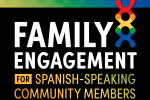
Family Engagement for Spanish-Speaking Community Members, a new workbook that provides case studies and planning tools to help library workers better engage Spanish-speaking families. The guide is available for free download in
English and
Spanish and includes templates, worksheets, best practices, and other easy-to-implement resources for moving programming from involvement to true engagement, exploring a multitude of Spanish-speaking identities, utilizing resources on community mapping and partnership development, and engaging families in community conversations....
Public Library Association, July 16
| |
|
Jeehyun Davis, Alayne Mundt, and Leslie Nellis write: “This article presents a case study of a pilot project conducted at American University Library to evaluate JSTOR Seeklight, an AI-assisted tool designed to generate descriptive metadata and transcription for digitized archival materials.
Our experience suggests that AI tools can function as meaningful workflow enhancements that support, rather than replace, professional expertise.
Seeklight generated useful baseline titles and descriptions, but authority control, contextual interpretation, and metadata standardization continued to require professional intervention.”...
Library Resources & Technical Services, vol.
70, no. 3, July
| |
|
Dan Johnson writes: “Multnomah County (Ore.) Library has been hosting graphic-novel book clubs for 2nd to 3rd, 4th to 5th, and 6th to 8th grade readers since 2022. When this initiative began, following the pandemic, student reading scores in the area were at an all-time low. We wanted to provide an opportunity for struggling readers to build their literacy skills in a less intimidating format.
Research indicates that the visual nature of graphic novels helps remove barriers for these readers and effectively improves overall reading abilities.”...
Book Links, July
| |

|
|
|
Douglas Soule writes: “A Florida school district that has already removed hundreds of books is questioning whether traditional high school libraries are needed.
It’s a situation that book access advocates say represents an evolution in Florida’s book banning practices, where school districts have already
removed or restricted more titles than any other state. At a recent workshop, Clay County (Fla.) School Board member Ashley Gilhousen mentioned it would be helpful to talk to school employees about what ‘they see as the benefits of the media center,’ a common term schools use for libraries.”...
WUSF-FM (Tampa, Fla.), July 16; Oct. 1, 2025
| |
|
Kaitlin Riordan writes: “The Anderson County (Tenn.) Library Alliance is suing the county library board, alleging that the state asked public libraries to adhere to a presidential executive order and a state law that did not apply to them.
Last fall, Tennessee Secretary of State
Tre Hargett issued instructions to public libraries to review their collections in light of President Trump’s executive order on gender ideology in federal policies.
The lawsuit says the executive order does not apply to states, violates the First Amendment, and is being used to ‘satisfy a political agenda.’”...
WBIR-TV (Knoxville, Tenn.), July 17; Nashville Scene, Nov.
10, 2025
| |

|
|
|
Elissa Malespina writes: “Stop talking about libraries.
I know that sounds strange coming from a librarian.
But school boards do not make decisions about libraries in isolation.
They vote on budgets, student achievement, district goals, graduation rates, staffing, transportation, and dozens of other needs.
When I served on the board, I was not asking whether librarians mattered.
I was asking how every dollar supported the goals the district had already established.
That distinction matters because librarians sometimes begin with the wrong argument.
Our facts have value, but they do not always answer the question decision makers are trying to resolve.”...
The AI School Librarian, July 21
| |
|
Ritoban Mukherjee writes: “Do you ‘accept’ or ‘reject’ that cookie request? Browser cookies don’t just remember your login details: They can track your browsing history across websites, follow you around with specific ads, or even hijack your active browser session to log into your accounts without a password.
On the other hand, if you don’t click accept when you see a cookie banner, that can affect your browsing experience—many websites need cookies to function normally.
Luckily, cookie management isn’t just a binary choice any more.”...
Lifehacker, July 20
| |
|
Michael Kozlowski writes: “When it comes to videogames, many players teach themselves using the learning-by-doing method. They load into the game guns blazing as rookies, fail and respawn, and overall have a good time.
However, if you are truly passionate or wish to take the pro route, then you might want to go past the videogame streams into novels, developer stories, cultural analyses, and more.
Adding the right books to your reading list can make complex games seem less intimidating.
Whether they include general practical tips or behind-the-scenes info, they can help players better understand important concepts.”...
Good e-Reader, July 21
| | |

|
|
|
American Libraries Direct is a free electronic newsletter emailed every Wednesday to personal members of ALA.
Editor, AL Direct: Greg Landgraf
Direct ad inquiries to: Melissa Carr
Send news and feedback: AL Direct
All links outside the ALA website are provided for informational purposes only. Questions about the content of any external site should be addressed to the administrator of that site. AL Direct FAQ.
American Libraries will not sell your email to outside parties, but your email may be shared with advertisers in this newsletter should you express interest in their products by clicking on their ads or content. If advertisers choose to communicate with you by email, they are obligated to provide you with an opportunity to opt-out from future emails in compliance with the CAN-SPAM act of 2003 and the European Union’s General Data Protection Regulation of 2018. Read the ALA privacy policy.
To manage your American Libraries email preferences, click here.
To unsubscribe from all ALA emails, click here.
American Library Association | 225 N. Michigan Avenue, Suite 1300 | Chicago, IL 60601
|
|
|
|
|
|
|
|






.jpg)