|
Annaliese Melvin writes: “Many library systems around the country rely on the help of volunteers to make our workflows successful.
In my system, this includes teen volunteers, and in the summer paid teen employees.
If you are new to working with teens, you may feel apprehensive about how to manage their workflow.
Whether you work with teens as summer volunteers or school year employees, these tips can help you set them up for success.”...
ALSC Blog, July 28
| |
|
Sam Winemiller writes: “For introverted librarians (like me) in public-facing positions, the parts of our jobs that require the most face time are
often the most exhausting. I know messy human relationships aren’t unique to the academe, but the academe does tend to attract many smart and opinionated cooks to a pretty complicated kitchen.
When I’ve found myself in such situations where the vibes are distinctly not good, my natural conflict aversion makes it more difficult to contribute.
Over the past several years, reminding myself of a few truths has helped me push through these emotional challenges.”...
ACRLog, July 24; College & Research Libraries News, vol.
87, no. 4, Apr.
| |
|
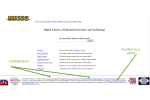
Anita Coleman writes: “At the Seattle World’s Fair in 1962, ALA showed the world what a library could become.
Library 21, as the exhibit was called, imagined a future of networked knowledge, instant retrieval, and universal access.
In the summer of 2002, I launched dLIST—the Digital Library of Information Science and Technology—the field’s first open access disciplinary repository for library and information science scholarship.
It was built on three convictions that were, in 2002, either ahead of their time or simply unheard of.”...
ALA150, July 17
| |

|
|
|
Amalia E. Butler writes: “As youth librarians, we know how important it is to collect our statistics.
We count program attendance, track circulation, tally summer reading participation, document outreach visits, and much more.
The numbers are entered, the spreadsheets are filed, and another reporting cycle begins.
When we take the time to reflect on the data, it can guide us to meaningful action.
Good data helps us ask better questions, understand our communities more deeply, and make more informed decisions about our services.”...
ALSC Blog, July 25
| |
|
Amanda Silberling writes: “At Bangor (Maine) Public Library, patrons turn to librarian Hannah Cyrus when they need help with anything involving technology.
Usually, Cyrus’s classes like Intro to Computers get about a dozen attendees.
But so many people expressed interest in her first Avoiding Artificial Intelligence (AI) workshop that she had to cut off registration at 30 people, open a waitlist, and share the workshop on Zoom.
Including the livestream, about 70 people attended each of Cyrus’s first two workshops.”...
TechCrunch, July 25
| |
|
“The absence of clear personnel policies could lead to confusion, conflict, and organizational risk.
As you consider your own personnel policy, the following questions and resources may help support your review and identify areas for improvement.
These policies may cover areas such as behavior management, privacy, access to information, emergency response, staff training, hiring, scheduling, leave, performance expectations, grievances, and workplace conduct.”...
Texas State Library Archives Commission, July 23
| |

|
|
|
Frank Landymore writes: “Traditionally, books have been good for two things: reading and looking nice on a shelf.
But AI companies are interested in neither.
To those building large language models, books are nothing more than fodder to be devoured en masse before being spit out like fishbone.
Antique books may be endangered.
Rare booksellers in the Netherlands are being
inundated with bulk purchases they believe are being made by AI companies, though they can’t know for sure.”...
Futurism, July 25; NL Times, June 25
| |
|
Sally Sax writes: “Twenty-five years after the US Copyright Office’s first Digital Millennium Copyright Act review, libraries operate in an increasingly noncompetitive digital information environment.
A lack of digital ownership rights remains a critical barrier to libraries serving their missions as memory institutions.
Library leaders can use the reaction to Sony’s announcement [to end sales of physical PlayStation games] and similar cultural moments to showcase our institutional expertise on digital rights issues, and to advance our interests in library-owned digital collections and federal contract override protections.”...
Association of Research Libraries Views, July 22
| |
|
Cameron C. Beatty writes: “Diversity, equity, and inclusion (DEI) is not a slogan. It is not a branding exercise.
It is not a campus accessory to pull out during heritage months and quietly hide when the political weather changes.
At its best, DEI education helps people understand history, power, identity, inequality, institutional responsibility, and democratic life.
It helps us name harm before harm becomes normalized.
As we enter the next academic year, especially for those of us whose work embodies DEI even when the acronym itself is treated like contraband, I offer four considerations.”...
Inside Higher Ed, July 24
| |

|
|
|
Graeme Peacock writes: “Google offers some very convenient and highly advanced software—there's no doubt about that—but it comes at the cost of pervasive user tracking.
For nearly nine years, an anti-Google movement called
de-Google has quietly grown on Reddit. It's a privacy-focused community whose members share how they cope in a world without Google products.
I've always been pro-privacy, and naturally gravitate toward software that respects it.
These are the four ways (of many) I live without Google.”...
How-To Geek, July 24
| |
|
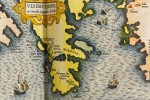
Maria Peña writes: “Christopher Nolan’s blockbuster adaptation of The Odyssey introduces the epic poem attributed to Homer to a new generation of moviegoers, turning a nearly 3,000-year-old story into a fresh cultural touchstone.
The Library of Congress’s collections, covering centuries of time, document how artists, cartographers, and translators around the world have translated and reimagined Odysseus’s journey anew. LC’s holdings on work attributed to Homer go back about 2,000 years, with a papyrus fragment from The Iliad, the precursor to The Odyssey.”...
Library of Congress: Timeless, July 28
| |
|
While Jimothy, the Seattle raccoon with an unusually short and rounded shape, may have achieved viral fame, it’s remained a fan of libraries.
Jimothy
completed the Summer Quest program at Seattle Public Library’s Ballard branch, visited
Cobb County (Ga.) Public Library’s genealogy and local history collections, and inspired book lists at
Kitsap Regional Library in Bremerton, Washington, and
Pima County (Ariz.) Public Library....
Seattle Public Library, July 17; Cobb County (Ga.) Public Library, July 23; Kitsap Regional Library, July 23; Pima County (Ariz.) Public Library, July 20
| | |

|
|
|
American Libraries Direct is a free electronic newsletter emailed every Wednesday to personal members of ALA.
Editor, AL Direct: Greg Landgraf
Direct ad inquiries to: Melissa Carr
Send news and feedback: AL Direct
All links outside the ALA website are provided for informational purposes only. Questions about the content of any external site should be addressed to the administrator of that site. AL Direct FAQ.
American Libraries will not sell your email to outside parties, but your email may be shared with advertisers in this newsletter should you express interest in their products by clicking on their ads or content. If advertisers choose to communicate with you by email, they are obligated to provide you with an opportunity to opt-out from future emails in compliance with the CAN-SPAM act of 2003 and the European Union’s General Data Protection Regulation of 2018. Read the ALA privacy policy.
To manage your American Libraries email preferences, click here.
To unsubscribe from all ALA emails, click here.
American Library Association | 225 N. Michigan Avenue, Suite 1300 | Chicago, IL 60601
|
|
|
|
|
|
|
|






.jpg)