|
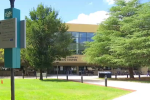
ALA and the International Interior Design Association have announced the winners of the 2026 Library Interior Design Awards. Submissions are open to any library worldwide and are judged by industry professionals for extraordinary interior design and innovative concepts. Of the selected projects, one is named Best of Competition. The winners were recognized in June at ALA’s Annual Conference and Exhibition in Chicago....
American Libraries feature, Fall
|
|
|
Reanna Esmail writes: “Library workers are well aware of the effects of book bans and censorship.
Propaganda and disinformation are the flipside of the same coin.
Understanding the complex relationships among these interrelated processes is more critical than ever, especially as libraries explore possible solutions and responses.
The following books show how disinformation can lead to censorship and how censorship can, in turn, allow disinformation to thrive.”...
American Libraries column, Fall
|
|
|
Eric Stroshane writes: “ALA’s Office for Intellectual Freedom is receiving reports of bots conducting automated spam searches of library catalogs.
This behavior is nefarious and a security concern requiring immediate action.
Bot activity during normal business hours can also negatively impact catalog performance for legitimate users.
Imperva’s 2025
Bad Bot Report indicates that bot traffic is ‘infiltrating industries, bypassing security measures, and disrupting digital ecosystems,’ and that artificial intelligence (AI) is rendering bot activity more pervasive and damaging, a trend that has only gotten worse in 2026.”...
Office for Intellectual Freedom Blog, Sept.
29
|
|

|
|
|
M Roberts writes: “I thought my first year at Vanderbilt had flown by, but as it turns out, the first semester of my second year seems like it’s moving even more quickly! I’ve been thinking a lot about how different this year feels from last year, and how I wish I could go back and tell myself not to be stressed.
If there were three things I could tell myself a year ago, they would be: Spend time on relationships, don’t panic if you don’t know the answer, and enjoy the moment.”...
ACRLog, Sept. 26
|
|
|
Stephanie Book writes: “The American Association of School Librarians (AASL) has relaunched the
AASL Standards web portal, providing school librarians and their learning communities with an enhanced digital resource for exploring, understanding, implementing, and advocating for the second edition of the
National School Library Standards for Learners, School Librarians, and School Libraries. With streamlined navigation, curated collections, improved search functionality, and a growing library of new, second edition–aligned resources, the site provides users with clearer pathways from learning about the standards to putting them into practice.”...
Knowledge Quest, Sept.
23
|
|
|
Camellia Burris writes: “Former library director Luanne James is suing Rutherford County (Tenn.) Library System six months after she was fired for refusing to relocate LGBTQ-related books. Luanne James filed a federal civil rights lawsuit September 23 in the US District Court in Nashville.
She’s claiming that Rutherford County’s library board wrongfully terminated her in March, violating discrimination laws and her First Amendment right to freedom of speech.
The
board voted 8–3 to oust James after she refused an order to relocate more than 100 books from the children’s section to the adult’s section.”...
WPLN-FM (Nashville), Sept. 25, Mar. 31
|
|

|
|
|
Alika Medina writes: “The research lab Transluce says an OpenAI agent targeted the University of New Mexico’s digital library in multiple hacking attempts in May, but did not successfully breach the system.
According to
the report, the agents were trying to obtain a photograph from UNM’s Valmora Collection, which documents the history of health care in Mora County.” New Mexico Attorney General Raúl Torrez
urged congressional leaders to regulate the AI industry in the wake of the attempted hack....
KOB-TV (Albuquerque, N.M.), Sept. 24; Transluce, Sept. 23; Source NM, Sept. 25
|
|
|
“Library censorship surged in 2025. Small and rural libraries face these challenges with a fraction of the staff and budget of their urban counterparts, which is exactly why the Association for Rural and Small Libraries wanted to ask our members what building a diverse collection actually looks like in their communities.
The strategies librarians described were practical, not theoretical.
Most rely on patron requests, review journals, and vendor lists to guide their purchasing, and interlibrary loan programs to fill gaps they can’t afford to buy outright.”...
Book Riot/Association for Rural and Small Libraries, Sept.
25
|
|
|
Abigail Goben writes: “About a year ago I was invited to give a lecture designed to spark critical thinking in graduate students when considering using generative AI and other tools.
I wanted something to hang the presentation on, and an acronym emerged.
The ACToRS framework is a lens in which to consider the products and vaporware that is being marketed to us, to consider what problem we are trying to solve, and to take a step back from the exclamation points and assertions of Faster! Better! Now! It stands for: accountability, credit, trust, risk, and surveillance.”...
Hedgehog Librarian, Sept.
22
|
|

|
|
|
Olina Banerji writes: “School boards have been mired in fractious political debates in recent years.
Fights with parents and community members have branched out to topics like transgender studentsc rights and whether to remove certain books from school libraries.
But beyond school board meetings, communities don’t have easy access to information on how their school board members vote on these topics.
A
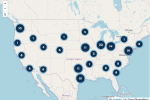
new national dashboard will present data on how school boards in 161 districts vote on book bans, LGBTQ-student policies, limits on what teachers can teach, private school choice, and the presence of immigration enforcement agents in schools.”...
Education Week, Sept.
25
|
|
|
Roger C. Schonfeld writes: “We are moving away from a model that is primarily organized around digital asset management.
Instead, we may wish to think in terms of the activation infrastructure for distinctive collections.
Rather than comparatively passive institutional digital custody, an activation infrastructure has as its purpose to maximize the impact of distinctive collections.
This activation infrastructure incorporates library and archival professionals, technicians and student workers, distinctive collections, processing workflows, digital systems, and consortial and other cross-institutional tooling, among other elements.
Foundationally, it is a kind of fly-wheel, benefiting from, and in turn generating, cross-institutional scale.”...
The Scholarly Kitchen, Sept.
29
|
|
|
Emily Long writes: “Canva is one of the most popular design tools for creating everything from fliers and business cards to interactive presentations. It’s pretty user-friendly even for those who don’t have any design experience, but if you want to level up your Canva experience, consider these tips and tricks.”...
Lifehacker, Sept. 29
|
|
|

|
|
|
American Libraries Direct is a free electronic newsletter emailed every Wednesday to personal members of ALA.
Editor, AL Direct: Greg Landgraf
Direct ad inquiries to: Melissa Carr
Send news and feedback: AL Direct
All links outside the ALA website are provided for informational purposes only. Questions about the content of any external site should be addressed to the administrator of that site. AL Direct FAQ.
American Libraries will not sell your email to outside parties, but your email may be shared with advertisers in this newsletter should you express interest in their products by clicking on their ads or content. If advertisers choose to communicate with you by email, they are obligated to provide you with an opportunity to opt-out from future emails in compliance with the CAN-SPAM act of 2003 and the European Union’s General Data Protection Regulation of 2018. Read the ALA privacy policy.
To manage your American Libraries email preferences, click here.
To unsubscribe from all ALA emails, click here.
American Library Association | 225 N. Michigan Avenue, Suite 1300 | Chicago, IL 60601
|
|
|
|
|
|
|
|