|
Eliminating E-Rate would have serious negative effects on the US economy, according to a
new economic study released October 8 by the Schools, Health, and Libraries Broadband (SHLB) Coalition, ALA, and coalition partners.
The analysis, conducted for SHLB by independent economic consulting firm The Brattle Group, estimates that removing roughly $2.6 billion in annual E-Rate support would reduce annual real GDP by about $4.2 billion, or about $1.60 in lost economic activity for every $1 of support removed....
ALA Public Policy and Advocacy Office, Oct.
9
| |
|
Gena Parsons-Diamond writes: “The Association of College and Research Libraries (ACRL) has published
The State of US Academic Libraries: Findings from the ACRL 2025 Annual Survey. The annual Academic Library Trends and Statistics Survey gathers critical information about academic library staff, expenditures, collections, circulation, and information services.
The data helps staffers and administrators evaluate library performance over time and make peer comparisons.
It can also help articulate the value of academic libraries and their impact on higher education, demonstrating the core services libraries provide and the resources needed to support institutional missions....
ACRL Insider, Oct. 13
| |
|
Jaime Eastman writes: “Whether in the library or in our lives, stress often doesn’t come from one big thing.
Instead, it comes from lots of little things happening at once, or the cumulative effect of those little things over time.
To reduce stress, we need to identify and address those causes.
Programming should be exciting, not exhausting.
Time spent at the desk should encourage connection, not avoidance.
Well-rested staff members bring more creativity and enthusiasm.
Sustainable systems keep staff members and patrons engaged and appreciative.
When we can reduce stress, we improve consistency, and everyone wins.”...
ALSC Blog, Oct. 8
| |

|
|
|
Sam Suber writes: “Choice’s latest white paper, “The Optimized Library: Prescriptive Foundations for Resource Stewardship in an Era of Fiscal Austerity,” shows academic libraries how to navigate fiscal threats by bridging library science and operations research.
Through case studies and by translating operational research concepts into practical collection strategies, the paper grapples with a tension many libraries are facing: They have the data to identify future fiscal threats but lack the mathematical framework to steer around them.”...
Choice, Sept. 29
| |
|
Steve Tetreault writes: “Despite what too many adults continue to believe, students are not very good with technology.
For the most part, their use and understanding of technology is surface-level. Their technological inabilities are compounded by the fact that many of the productivity tools adults use on a regular basis are not regularly used by students.
Email? Why would they, when they have texting? Printing, and/or understanding file types? They carry a display screen on their person—no need to deal with files or printing.
So the kids aren’t alright when it comes to ‘basic’ tech use.”...
Knowledge Quest, Oct.
7
| |
|
ALA and the Chief Officers of State Library Agencies have opened registration for National Library Legislative Day (NLLD) 2027. Hundreds of library advocates from across the country will gather in Washington, D.C., February 24–25, 2027, to make the case for federal support of libraries of all types.
The event will open with an afternoon briefing on February 24 that includes education, advocacy training, and networking activities, followed by a day of meetings with federal legislators on February 25. The
deadline to register is November 25, and capacity is limited....
ALA Public Policy and Advocacy Office, Oct.
7
| |

|
|
|
Elissa Malespina writes: “On October 9, Moms for Liberty announced a new artificial intelligence (AI)-powered program that the organization says monitors school board agendas across more than 13,000 districts nationwide.
The tool reportedly checks agendas every 12 hours, flagging issues involving curriculum, diversity and equity policies, gender identity, and other topics.
The goal is to alert members before school boards vote so they have time to respond.
What concerns me is not that someone is reading school board agendas, but who is operating this technology, what the organization has already done in public education, and how AI could expand those efforts.”...
The AI School Librarian, Oct.
13
| |
|
Becky Siegel Spratford writes: “Every year as big book award nominees are announced, people have opinions and complaints. This year everything came to a public head when New York Times opinion writer Bret Stephens wrote ‘The Literary World's DEI Checklist’ about the National Book Award nominees.
With all disrespect to his faulty logic, juries tend to be made of previous nominees and winners.
Women, people of color, and queer people have slowly been added to those ranks, and when their turn comes up to be a juror, they bring their perspective and reading preferences with them.”...
RA For All, Oct. 7
| |
|
Nathalie op de Beeck writes: “At a time when media consolidation is decimating local news organizations, journalist and civic strategist Terry Parris Jr.
believes that libraries—and specifically, library patrons—may offer a solution.
In 2024, Parris founded the Library Newsroom Project to combat the small-town media deserts he saw arising across the country.
Now, he’s bringing LNP pilots to Miami-Dade Public Library, the Center for Cooperative Media at Montclair (N.J.) State University, and Boston Public Library, with additional sites in development.”...
Publishers Weekly, Oct.
2
| |

|
|
|
Jill Lawless, Hillel Italie, and Kostya Manenkov write: “Canadian poet, essayist, and translator Anne Carson won the Nobel Prize in literature October 8 for ‘bold and inventive’ works that fuse the classical and the modern and blur the boundaries of poetry and prose.
The Toronto-born Carson, 76, has drawn on themes from classical Greek and Roman literature, modern influences, and personal experience for genre-blending titles that have ranged from translations of ancient Greek poets to collaborations with dancers and musicians, including Laurie Anderson and Lou Reed.”...
Associated Press, Oct.
8
| |
|
nickb writes: “There are not many computer file formats I would trust to still be readable 50 years from now, but plain text is one of them.
That may sound like faint praise.
A text file cannot embed a spreadsheet, preserve elaborate page layouts, run a presentation, or provide many of the conveniences we expect from modern applications.
What it does instead is store text in one of the simplest and most widely understood forms in computing, and that simplicity is a large part of why it has lasted.”...
Dead Parrot BBS, Oct.
4
| |
|
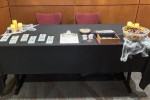
Theadora Soter writes: “To begin bridging the gap between the public and University of Utah Marriott Library’s rare books collection, we reached out to Bookish SLC, a social reading group that participates in silent, group reading all around the city.
Together, we decided that the Bookish October 2025 meeting would be held at the University of Utah.
With logistics in place, we turned to the heart of the event—the books themselves.
As a relatively new curator, I spent considerable time crafting a selection that would be both seasonally spooky and representative of the collection’s breadth.”...
TPS Collective, Oct. 12
| | |

|
|
|
American Libraries Direct is a free electronic newsletter emailed every Wednesday to personal members of ALA.
Editor, AL Direct: Greg Landgraf
Direct ad inquiries to: Melissa Carr
Send news and feedback: AL Direct
All links outside the ALA website are provided for informational purposes only. Questions about the content of any external site should be addressed to the administrator of that site. AL Direct FAQ.
American Libraries will not sell your email to outside parties, but your email may be shared with advertisers in this newsletter should you express interest in their products by clicking on their ads or content. If advertisers choose to communicate with you by email, they are obligated to provide you with an opportunity to opt-out from future emails in compliance with the CAN-SPAM act of 2003 and the European Union’s General Data Protection Regulation of 2018. Read the ALA privacy policy.
To manage your American Libraries email preferences, click here.
To unsubscribe from all ALA emails, click here.
American Library Association | 225 N. Michigan Avenue, Suite 1300 | Chicago, IL 60601
|
|
|
|
|
|
|
|