|
Donna Seaman, Annie Bostrom, and Susan Maguire write: “During American election seasons in the era of social media and artificial intelligence, it is easy to become inundated by information—some strictly factual, some biased, and some that’s just filling space in a shameless play for clicks and views.
But deeper analysis and understanding are possible.
Booklist editors have compiled a list of nonfiction titles that investigate both historical and recent forces that have shaped democracy and our electoral system.
(And for children and young adults, see Booklist’s recommendations on
understanding propaganda and
surveillance states.)”...
AL: The Scoop, Oct. 16
| |
|
Hilary Turner writes: “The biggest challenge for me right now as a first-year academic librarian is: How do I become a familiar presence on campus and acquaint students, professors, and other constituents with the services I offer? How do I build social and professional capital? The most helpful way for me to begin answering this question has been to run mini experiments.
Curiosity is a good friend in this.
Here are four of the outreach strategies I’ve tested in my first two months on the job.”...
ACRLog, Oct. 19
| |
|
Maria Leon-Roman writes: “Día de los Muertos is a holiday observed on November 1–2 that is traditionally celebrated in Mexico and in parts of Latin America with the purpose of honoring our loved ones who have passed away with ofrendas (altars), food, music, prayer, and cemetery visits.
It is more of a festive than a somber occasion.
I knew when I became a children’s librarian that this would be a program that I would want to host at my branch.
Here’s what I’ve done over the years.”...
ALSC Blog, Oct. 20
| |
|
Join the American Library Association for the first-ever
ALA Demo Day on November 18, 2026! This free virtual event brings together library staff and decision-makers for a convenient, low-stakes way to discover new products and services.
ALA Demo Day: Games & Play will explore innovative games, puzzles, toys, and play-based learning resources designed to engage library users of all ages.
Watch live demos, ask questions, and compare solutions all in one convenient place.
See who’s participating and register for free.
|
| |

|
|
|
ALA focused on the success of the federal E-Rate program
public comments delivered to the Federal Communications Commission (FCC) October 13. The FCC has proposed terminating or limiting E-Rate, which has provided affordable broadband to libraries and schools for nearly 30 years. Roughly 75% of US public libraries rely on E-Rate support for internet access and broadband-enabled services. ALA encourages libraries to file comments by November 12 to tell the FCC what losing E-Rate would cost their communities, using the sample comments at
ala.org/erate....
ALA Public Policy and Advocacy Office, Oct.
14
| |
|
H. Jiahong Pan writes: “For Michael Sayen, visiting the local library after hours is a great way to get work done, or seek respite from the weather, regardless of what day it is.
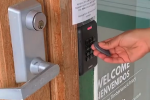
The Wyoming (Minn.) branch of East Central Regional Library (ECRL) is home to a new initiative called ‘extended access,’ which allows users to access a library branch when it is unstaffed.
ECRL is one of a handful of rural library systems across the United States to offer such a service, increasing library access at a time when libraries are struggling for funding.”...
The Daily Yonder, Oct.
13
| |
|
Londun Christensen writes: “The removal of a longtime logo from the Farmville (N.C.) Public Library is raising concerns about transparency after three residents reportedly complained that its design resembled a rainbow and was associated with LGBTQ+ beliefs. The logo had represented the library for 14 years before it was removed following complaints made to a town commissioner.
Farmville Mayor Alex Joyner said his biggest concern is how the decision was made and the lack of public discussion surrounding the change.
Residents will have an opportunity to share their opinions and concerns during a meeting November 2.”...
WCTI-TV (New Bern, N.C.), Oct. 19
| |

|
|
|
The Pew Research Center has published new fact sheets on Americans’ use of the
internet,
social media, and
mobile devices in 2026. Surveys found that 91% of American adults own a smartphone, and 16% own a smartphone but do not use broadband at home.
YouTube is the most popular social media platform, used by 84% of American adults, followed by Facebook, Instagram, and TikTok.
While home broadband has been widely adopted, people with lower income and education levels are less likely to report subscribing to a broadband service at home....
Pew Research Center, Oct.
19
| |
|
Zachary Maiorana writes: “For our digital team at Harvard University’s Schlesinger Library, email collections frequently pose complex and isolated challenges.
In many cases, email accessions require significant attention to identify personally identifiable information, achieve normalization of formats, reach ideal levels of archival processing, and migrate email data to a preservation repository.
Mailboxes and loose email files we receive from donors tend to resist our efforts to reach a good standard of description, preservation, and access.
This series takes a look at recent technical issues involving email and how we worked them out.”...
Society of American Archivists BloggERS, Oct.
16
| |
|
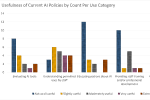
Only 9% of public libraries have implemented artificial intelligence (AI) policies, according to a new survey by Library Futures.
Most respondents from libraries that did have AI policies did not find them useful for most applications, and many reported gaps in the AI policy.
However, respondents at libraries that did not have a policy believed their library needed one.
Based on these findings, the Library Futures AI policy working group plans to develop resources such as general AI policy guidelines, model policies, recommendations for vendor negotiations and collection development policies, and a bibliography....
Library Futures, Oct.
15
| |

|
|
|
Jaime Taylor writes: “In the field of urban planning, a well-established and growing body of discourse encourages reconsideration of stakeholder theory.
This article will review the advent of stakeholder theory in the business management literature, distill urban planning’s criticism of the theory and ideas for moving past it, and suggest what from urban planning’s critique of stakeholder theory can be adopted in librarianship’s theory and practice.
As in urban planning, these new directions for librarianship will be oriented toward democracy and justice.”...
Urban Library Journal, vol.
32, no. 1
| |
|
Glyn Moody writes: “Back in the early days of the internet, 1988 to be precise, the self-replicating computer program known as the Morris worm spread across the network and shut down thousands of online VAX and Sun computers.
Since that early botched experiment, intentionally malicious worms have been written to create botnets that can launch distributed denial-of-service attacks. But the arrival of artificial intelligence (AI) agents that can carry out actions autonomously brings with it a new threat: AI worms potentially able to seek out, hack into, and infect any device that is online.”...
Techdirt, Oct. 16
| |
|
Kelly Jensen writes: “Libraries are on the ballot this November.
Beyond the top-of-the-ballot offices, two main ballot matters relate to public libraries and schools this fall.
First, there will be elections in several states and municipalities for school and library board members.
Who sits on these boards matters tremendously.
Second, there will be numerous elections related to library funding.
Here’s your reminder to get to know what is on your local ballot, how to determine the best candidate for office, and what to do after you don your ‘I voted’ sticker.”...
Book Riot, Oct. 16
| | |

|
|
|
American Libraries Direct is a free electronic newsletter emailed every Wednesday to personal members of ALA.
Editor, AL Direct: Greg Landgraf
Direct ad inquiries to: Melissa Carr
Send news and feedback: AL Direct
All links outside the ALA website are provided for informational purposes only. Questions about the content of any external site should be addressed to the administrator of that site. AL Direct FAQ.
American Libraries will not sell your email to outside parties, but your email may be shared with advertisers in this newsletter should you express interest in their products by clicking on their ads or content. If advertisers choose to communicate with you by email, they are obligated to provide you with an opportunity to opt-out from future emails in compliance with the CAN-SPAM act of 2003 and the European Union’s General Data Protection Regulation of 2018. Read the ALA privacy policy.
To manage your American Libraries email preferences, click here.
To unsubscribe from all ALA emails, click here.
American Library Association | 225 N. Michigan Avenue, Suite 1300 | Chicago, IL 60601
|
|
|
|
|
|
|
|